
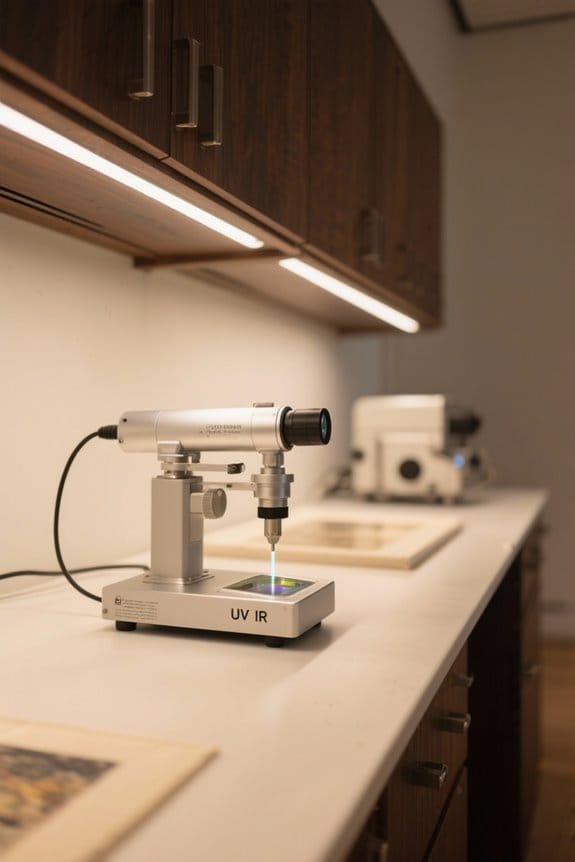

Art conservation requires careful management of light exposure, emphasizing the dangers posed by UV and infrared radiation. UV radiation accelerates fading and brittleness in materials, while infrared light generates heat that compromises structural integrity. Recommended exposure limits are 50 lux for sensitive items and up to 300 lux for more durable artifacts. Effective strategies include using UV-filtered LED lights, employing light meters for monitoring, and documenting cumulative exposure. These practices are essential for preserving valuable artworks and historical materials. More insights await in further discussions.
Key Takeaways
- UV radiation from natural and artificial light significantly deteriorates cultural heritage materials, causing fading and brittleness.
- Infrared light generates heat, affecting art materials by compromising structural integrity through moisture changes.
- Light levels should be limited to 50 lux for very sensitive items, 200 lux for oil paintings, and 300 lux for inorganic materials.
- Cumulative light exposure for sensitive items should not exceed 50,000 lux hours annually, with limited exhibition durations of 3-4 months recommended.
- Utilizing UV-filtered LED lighting and real-time monitoring systems enhances conservation efforts while promoting sustainable lighting practices in museums.
Understanding Light Damage in Art Conservation
Understanding light damage in art conservation is essential for preserving cultural heritage materials, particularly as exposure to light can lead to significant degradation over time. Items with high light sensitivity, such as paper and photographs, are particularly vulnerable, often suffering fading, yellowing, and embrittlement. Museums must carefully manage light exposure, adhering to effective limits of 50 lux for very sensitive items, while occasionally allowing up to 300 lux for more resistant materials. The reciprocity principle highlights that cumulative exposure can yield damage equivalent across varying light levels, necessitating vigilant monitoring. Institutions should not exceed an annual exposure limit of 50,000 lux hours to protect valuable artifacts from irreversible harm, maintaining a delicate balance between accessibility and preservation. No-neutral smart switches help manage indoor lighting by offering customizable scheduling options, which can be beneficial in maintaining appropriate light levels for art conservation.
The Role of UV Radiation in Deterioration

Ultraviolet (UV) radiation poses a significant threat to the longevity of cultural heritage materials, acting as a catalyst for deterioration. Natural sunlight and certain artificial light sources emit UV radiation, which can lead to fading, yellowing, and embrittlement—especially in sensitive materials like paper and textiles. The reciprocity principle indicates that cumulative damage results from prolonged exposure to low-intensity UV light, making even minor exposure harmful over time. To protect valuable artifacts, conservation practices recommend integrating UV-filtering devices in display lighting and minimizing light exposure wherever possible. Utilizing specialized lighting that eliminates UV radiation is essential for preserving artwork and historical items, allowing them to endure for future generations without the adverse effects of UV-related deterioration. When considering ambient lighting solutions for any display, it is important to prioritize LED strip lights and other smart lighting options that offer customizable placements and reduced UV emissions.
Impacts of Infrared Light on Artworks

How does infrared (IR) light affect the preservation of artworks? Infrared (IR) light is not visible but generates heat, which can markedly impact sensitive art materials. This heat causes moisture changes that can lead to deterioration, such as brittleness in papers and textiles. Furthermore, the energy from IR radiation causes thermal expansion and contraction, which can compromise structural integrity, creating cracks and other damage over time. To safeguard against these effects, conservation practices should limit IR exposure using cool light sources. Implementing exposure limits is vital in exhibition spaces where artworks are displayed. Additionally, IR monitoring devices serve as essential tools in evaluating infrared levels, helping conservators develop effective protective strategies to preserve valuable artworks. Choosing energy-efficient lights with minimal heat emission can further assist in protecting artworks from IR damage.
Measuring Light Levels in Exhibition Spaces
Effective measurement of light levels in exhibition spaces is essential for the preservation of delicate artworks and artifacts. Light intensity is typically measured in lux, with a preferred target of 50 lux recommended for very sensitive items. To accurately assess illumination levels, measuring tools, such as lux meters, should be positioned directly at the item’s display location. The cumulative light exposure can be calculated by multiplying light intensity (lux) by duration of exposure (hours), enabling effective management of sensitive items. Additionally, American National Standards Institute (ANSI) guidelines suggest maintaining illumination levels between 50 and 100 lux, ideally not exceeding 50,000 lux hours annually. Incorporating UV filters in exhibition lighting can also aid in protecting artifacts from damage while ensuring visibility. For optimal energy efficiency and long-term use, it is advisable to choose fixtures with a lifespan of over 25,000 hours.
Recommended Products

[Automatic Ranging Trajectory (ART) System] Elevates the optic externally in the mount to compensate for bullet drop—ranging and adjusting from 300m to 1200m with a single motion.


ADJUSTABLE LED LIGHTING: Adjust color temperature from 3000K to 6200K with 256 LEDs, producing 2300 Lumens and 96+ CRI.
Optimal Light Exposure Guidelines for Art
Determining the ideal light exposure for artwork is essential to ensuring their preservation and longevity. Art conservation guidelines recommend that very sensitive items, such as paper and photographs, should ideally be exposed to a maximum of 50 lux. This limitation helps prevent irreversible damage from ultraviolet (UV) light. Oil paintings, which are more resistant to light, can be displayed at 200 lux, while inorganic materials can endure up to 300 lux without significant deterioration. Empire-style chandeliers are ideal for enhancing the ambiance of a space without directly exposing delicate artworks to excessive light levels. Conservation institutions encourage limiting exhibition durations to 3-4 months to minimize cumulative light damage, measured in lux hours. When not on display, sensitive items should be kept in complete darkness or under very low light levels to preserve their integrity and extend their lifespan.
Strategies for Minimizing Light Exposure
Maximizing the preservation of light-sensitive artworks requires a strategic approach to limit their exposure to harmful lighting conditions. Utilizing light-tight storage boxes effectively blocks UV and visible light when items are not on display. Employing UV-filtered or UV-free lighting options is critical, as conventional fluorescent lamps often emit damaging UV radiation. Conservation professionals should implement rotational display schedules, limiting display time to 3-4 months at recommended light levels of 50-150 lux to minimize cumulative exposure. Regular monitoring with lux meters guarantees illumination levels remain appropriate, especially for very sensitive items, which should be kept at or below 50 lux. Additionally, integrating motion sensors in display cases can automatically turn off lights when unoccupied, further enhancing light management practices.
Recommended Products

Dispenses ice & water for unparalleled convenience: Commercially approved nugget countertop ice and water dispenser ideal for use in hospitals, clinics, break rooms, and similar settings. ETL-S listed to NSF-12 commercial standards. Three dispenser functions - ice, water, or ice+water.

Bundle Items Include: 1 x Canon XA70 UHD 4K30 Camcorder, 1 x HD Video Light, 1 x 64GB Sandisk Memory Card, 1 x Extra Battery, 1 x Extra Charger, 1 x Large Case, 1 x 58mm UV Filter, 1 x 5pc Cleaning Kit, 1 x Memory Card Wallet, 1 x USB Memory Card Reader

Efficient Heating & Cooling In One Device - No need to buy separate devices for heating and cooling! Our AC is designed to provide efficient Heating and Cooling in one device – making your life easier, more comfortable, and cost effective.
Best Practices for Selecting Lighting Sources
When selecting lighting sources for art conservation, it is essential to prioritize options that minimize damage while enhancing visibility. LED options are highly recommended due to their lack of UV emissions and infrared radiation, thereby protecting light-sensitive materials. A Color Rendering Index of 80 or higher is vital for accurately perceiving artwork colors without exposing them to harmful wavelengths. To further diminish UV emissions, UV-filtered fluorescent lamps may be used, ensuring traditional lights are avoided. Regularly monitor light intensity with lux meters, maintaining exposure levels of 50 lux for sensitive items and up to 200 lux for more resilient materials. Implement lighting designs that include glare reduction features, such as baffles or snoots, to enhance preservation while ensuring visibility. Choosing energy-efficient lighting solutions, such as smart bulbs, can also contribute to sustainable energy use while maintaining optimal conservation conditions.
Recommended Products

The Leica Q3 Is A Third-generation Camera Blending Classic Design With Modern Technology. It Features A 60mp Sensor, Fixed Focal Length Full-frame Design, And A New Hybrid Af Autofocus System. Noteworthy Additions Include 8K Video Recording And Revised Electronic Viewfinder (evf) And Lcd Designs. With A Timeless Aesthetic, Looking For A Versatile And Compact Camera That Meets The Needs Of Both Classic And Modern Photography.

Space-Smart & Large Capacity:This single-door dry aging fridge (23.8"W*23.6"D*34.3"H) delivers exceptional performance in a compact footprint. As a versatile dry ager with 149 lb capacity, it meets all your dry-aging needs.It can be seamlessly built into cabinetry or used as a standalone unit. Ideal for home kitchens, restaurants, and pantries, it brings professional-grade dry-aging within practical reach.

Compact Plug-in LED Picture Light For Various Sizes of Artwork (See Above) | This is NOT a Wireless Product | For Wireless Products See Our Rechargeable Touch Series and Rechargeable Micro Series | Discreet, Slim Bar Style Design | Available In Brushed Brass, Antique Bronze, Black, or Silver | Available in 2,700K, 3,000K or Color Tuning from 2700K - 4000K | Designed and Made in America
Documenting Light Exposure for Collections
Accurate documentation of light exposure is essential for preserving art collections, especially those containing light-sensitive materials. Establishing clear procedures for documenting light can enhance a conservation strategy by recording cumulative light exposure, which helps prevent potential light damage. Collections Management Systems (CMS) can be invaluable tools for monitoring and documenting light exposure in these sensitive collections. Institutions should also implement a light exposure quota that informs exhibition schedules and guides appropriate rotations of objects. Using standards like the Blue Wool Standard and microfading testers provides quantifiable metrics for sensitivity and damage, ensuring that conservators can accurately assess and manage light exposure levels. Adding modern arc floor lamps with energy-efficient LED bulbs to gallery spaces can provide adequate illumination while minimizing potential damage to art due to excessive light exposure. Ultimately, diligent documentation allows institutions to protect invaluable artworks from the adverse effects of light.
The Long-term Effects of Light Damage
Light exposure poses important long-term risks to cultural heritage materials, and understanding these effects is vital for effective conservation. Light damage is cumulative; both high light and low light levels contribute substantially to degradation. For materials used in libraries and museums, sensitivity to light varies, but many fall into high sensitivity categories, as indicated by the Blue Wool Standard. Recommended light exposure limits for very sensitive items are set at 50 lux, while some materials can withstand up to 300 lux. Ultraviolet (UV) radiation can accelerate fading and yellowing in numerous materials. Ensuring bulb compatibility is crucial for optimal brightness and efficiency in lighting installations, which can play a role in preservation efforts. As a result, employing effective light management strategies, including careful record-keeping of cumulative light exposure, is essential to preserving collections and enhancing their long-term longevity against inevitable deterioration.
Innovative Solutions for Light Management
As cultural institutions endeavor to protect their invaluable collections, implementing innovative solutions for light management has become a necessity. Utilizing UV-filtered LED lighting is a must-have, as it generates minimal heat and does not emit harmful UV or IR radiation, effectively shielding sensitive materials. Real-time monitoring systems are vital for tracking light exposure levels, enabling immediate adjustments in exhibition settings to protect artifacts. Employing selective shading techniques, such as UV-blocking films or acrylic panels, filters harmful radiation while allowing adequate visibility. Additionally, motion sensor technology optimizes light usage by turning lights on when visitors are present. Finally, a rotation strategy can reduce cumulative light exposure, giving artifacts essential time in dark storage to recover from potential damage. For optimal energy conservation, energy-efficient design of smart bulbs, like those consuming 9 to 11 watts, plays a crucial role in reducing electricity usage while maintaining adequate illumination levels.
Recommended Products

Blocks Harmful Bluelight between 380nm~480nm. The Best Anti Blue-Light optical grade product

Best Blue-Light and Damage protection. Strongest with best Blue-Light optical grade filters
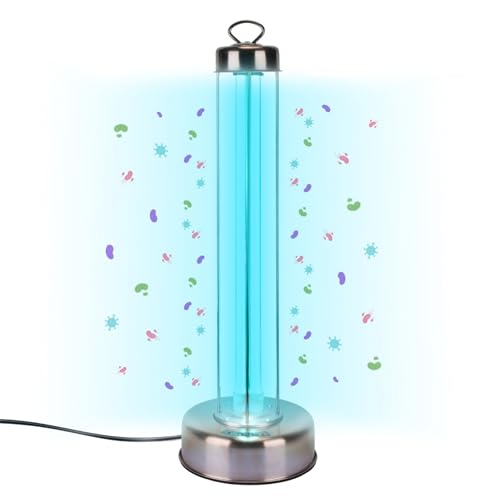
SAFE, OZONE-FREE UV LIGHT SANITIZER - Our premium stainless steel UVC light operates with NO harmful ozone emissions, unlike dangerous competitors selling similar-looking units that release toxic ozone. The AeraLight UV Sanitizer Lamp provides powerful sanitization without risking respiratory health issues or chemical exposure.
Sustainability Considerations in Lighting Choices
Sustainable lighting choices are increasingly recognized as vital practices in museum conservation, as they greatly impact both artifact preservation and environmental stewardship. Utilizing LED lights considerably minimizes UV and IR radiation, reducing potential damage to cultural heritage objects. In addition, energy-efficient lighting lowers operational costs and extends the duration of light sources. Integrating real-time monitoring systems for light exposure promotes sustainability by ensuring that energy-efficient lighting is used only when necessary, thereby reducing energy consumption. Regular assessments of lighting technologies keep museums knowledgeable about sustainable practices. Moreover, training staff on effective lighting management strategies is important for implementing conservation practices that safeguard artifacts while minimizing the ecological footprint of cultural institutions, thereby merging preservation with environmentally responsible choices. Incorporating energy-efficient LED bulbs not only saves on electricity costs but also provides a longer lifespan, reducing the frequency of replacements and contributing to sustainability efforts.
Recommended Products

Sealing system to rainproof digital monitor against moisture intrusion and water damage; two louvered vents with moisture screen that prevent heat buildup and intruders (big and small)

Sealing system to rainproof digital monitor against moisture intrusion and water damage; two louvered vents with moisture screen that prevent heat buildup and intruders (big and small)
Sealing system to rainproof digital monitor against moisture intrusion and water damage; two louvered vents with moisture screen that prevent heat buildup and intruders (big and small)
Frequently Asked Questions
How Does Temperature Affect Light Exposure and Art Conservation?
Temperature levels, like an unrelenting furnace, impact light exposure and art conservation. Humidity control, thermal stability, and proper storage conditions are essential; environmental factors influence long-term exposure, particularly for light-sensitive artwork materials. Conservation techniques must adapt accordingly.
Can Light Exposure Limits Vary for Different Types of Artwork?
Light exposure limits indeed vary across artworks, influenced by art medium differences and light sensitivity variations. Conservation standards range according to artist intent considerations, exhibition duration impact, and environmental conditions, including natural versus artificial light impact.
What Are the Signs of Light Damage in Artworks?
Signs of light damage in artworks include light fading, color changes, surface discoloration, material degradation, pattern alteration, texture modification, gloss reduction, paint cracking, ink bleeding, and potential frame damage, indicating deterioration due to excessive illumination.
How Often Should Conservation Assessments Be Conducted for Collections?
Conservation assessments should be conducted annually, with collection audits and routine inspections intertwining in conservation schedules. Effective assessment protocols, documentation practices, and stakeholder engagement strengthen preventative measures, while funding sources and training workshops guarantee enduring preservation of invaluable artworks.
Are There Specific Materials More Vulnerable to Light Damage?
Watercolor paintings, delicate papers, textile artifacts, photographic prints, and illuminated manuscripts are particularly vulnerable to light damage. Modern art, oil paintings, acrylic paintings, antique furniture, and glass sculptures also require careful light management for preservation.


