
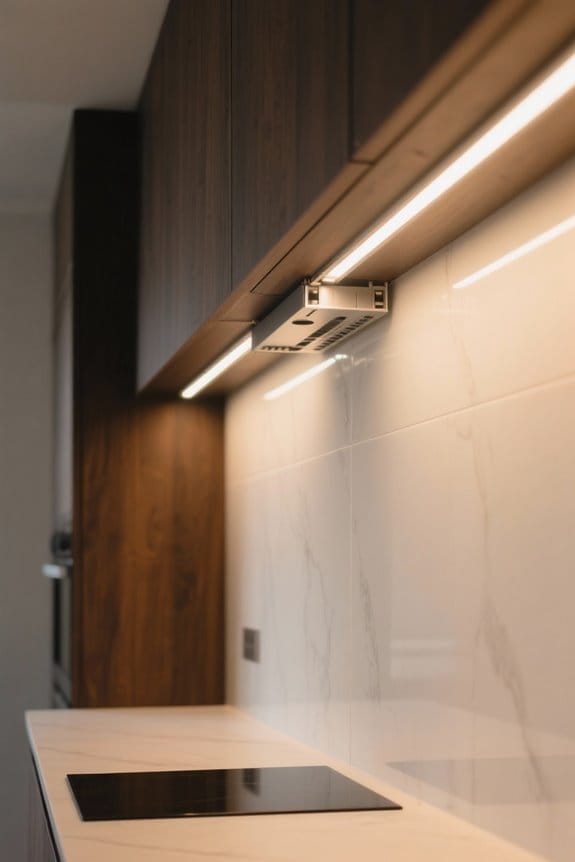

Track systems, including monorail and straight track lighting, serve unique purposes in flexible rooms. Monorail systems offer artistic design capabilities and can be shaped to fit irregular layouts, while straight track provides a more straightforward and budget-friendly option. Consider installation complexity, aesthetic choices, and energy efficiency when deciding. Monorail may cost more due to intricate fixtures and installation demands, while straight track excels in practicality. Understanding these elements will guide effective design decisions for your space. Learn more to explore the options available.
Key Takeaways
- Monorail systems offer flexibility for irregular layouts, ideal for creatively designed or high-ceilinged rooms.
- Straight track lighting provides a simple, budget-friendly solution for basic illumination needs.
- Installation of monorail lighting is more complex, often requiring a transformer and professional assistance.
- Monorail fixtures tend to be more decorative, enhancing the artistic expression in a room compared to standardized straight track options.
- Both systems can utilize energy-efficient LED bulbs, ensuring cost savings over time regardless of the choice.
Understanding Track and Monorail Lighting Systems
How do track lighting and monorail lighting systems differ in function and design? Track lighting features a rigid, linear straight track system that accommodates multiple fixtures, making it an ideal choice for modern and functional spaces. In contrast, monorail lighting serves as a flexible lighting solution, utilizing a hand-bendable rail that allows for custom shapes and artistic designs. While track lighting operates on line voltage (120 volts) and offers simpler installation, monorail systems run on low voltage (12 volts) and typically require professional installers for precise bends. Both lighting systems present a variety of fixtures; however, track lighting leans towards standardized options, while monorail lighting provides broader decorative choices, allowing for personalized and visually appealing installations. Many LED track heads, such as energy-efficient alternatives, operate below 10W while producing brightness equivalent to much higher wattage halogen bulbs.
Key Differences Between Monorail and Straight Track Systems

While both monorail and straight track lighting systems serve the essential function of illuminating spaces, their distinct designs and operational characteristics set them apart markedly. Monorail systems operate on low-voltage, often 12 volts, offering remarkable flexibility with the ability to bend and curve to fit unique layouts or high ceilings. In contrast, straight track systems typically operate at line voltage, providing a straightforward design suitable for basic illumination without such adaptability. Monorail systems, often featuring decorative fixtures, create a bold design statement but involve greater installation complexity, necessitating professional help. Conversely, straight track systems are easier to install, ideal for DIY projects, reflecting a minimalist aesthetic that may fail to meet all lighting needs or individualized designs. Recessed lighting options, such as those offered by Amico and Ensenior, provide dimmable features which allow for improved energy efficiency and brightness control, adding to the versatility of lighting setups in homes.
Advantages and Disadvantages of Each System
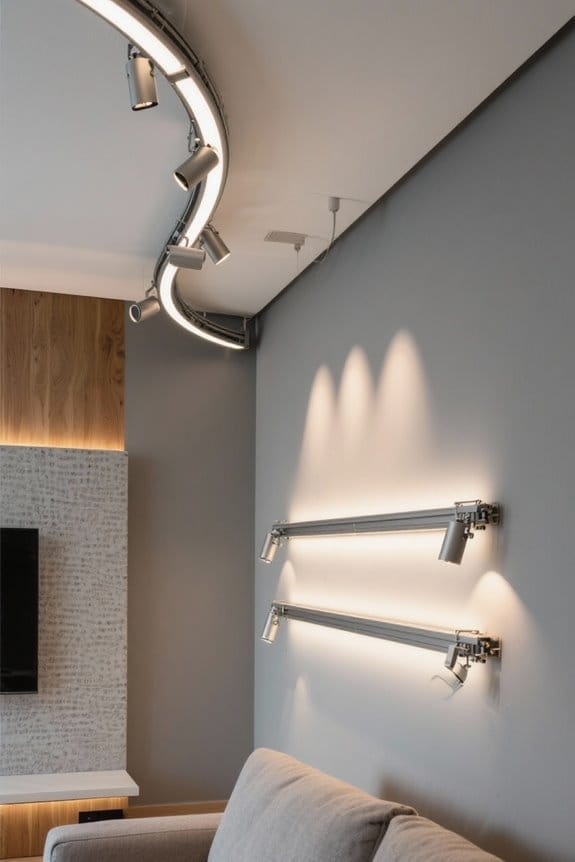
The decision between monorail and straight track lighting systems involves an evaluation of their respective advantages and disadvantages, tailored to specific design needs and environments. Monorail lighting offers remarkable flexibility, allowing for curved installations, ideal for unique layouts. However, its installation is complex, requiring professional assistance and often resulting in higher costs. Conversely, straight track lighting presents a simpler installation, making it a popular choice for DIY beginners and budget-conscious designers. This linear option excels in delivering focused task lighting, perfect for functional spaces like kitchens. Nonetheless, it may lack the ambient lighting capabilities that monorail systems provide. Additionally, monorail fixtures may demand more maintenance due to their delicate, low-voltage components, while straight track systems typically offer sturdier options with less upkeep. Energy-efficient LED options are available for both systems, consuming 80-90% less energy while maintaining brightness.
Cost Comparison: Monorail vs. Straight Track
Determining the cost differences between monorail and straight track lighting systems is a key factor in making an informed decision. The initial investment for a monorail lighting setup typically ranges from $400 to $500, reflecting its complexity and customizable features. In contrast, straight track systems cost between $150 and $250, depending on simpler components and installation ease. Additionally, monorail installations often require a transformer, raising costs further. While decorative fixtures can increase expenses for monorail systems, straight track offers economical options with standardized individual light fixtures. Nevertheless, both systems have different potential for energy savings, particularly when utilizing modern LED technology, which can help balance long-term financial considerations effectively across both lighting setups. When choosing a lighting system, consider the high-quality K9 crystals as they enhance both aesthetic appeal and functionality, especially for chandeliers.
Making the Right Choice for Your Space
When exploring lighting options, selecting the most suitable system for a specific space involves careful consideration of both functionality and aesthetics. Monorail lighting offers remarkable design flexibility, particularly in irregularly shaped or high-ceilinged rooms, allowing for custom shapes that enhance visual appeal. However, its low voltage operation complicates installation, which may deter some users. Conversely, straight track lighting provides budget-friendly, straightforward installation and is best for areas requiring functional illumination, making it ideal for kitchens or workspaces. When deciding, consider aesthetics, functionality, and budget constraints. If the primary goal is artistic expression, the monorail system excels; if practicality and cost efficiency are priorities, straight track lighting can meet those needs without compromising quality. Battery-operated sconces allow for wireless installation without electrical wiring, offering flexibility in lighting design and placement across various indoor spaces.
Frequently Asked Questions
What Are the Disadvantages of Track Lighting?
Track lighting resembles a narrow beam in a dark room, highlighting its disadvantages: low light intensity, design limitations, installation complexity, fixture compatibility issues, high maintenance requirements, energy efficiency concerns, and potential safety hazards from heat generation.
What Are the Three Types of Track Lighting?
The three track types are linear, monorail, and cable lighting, each differing in installation techniques, light styles, energy efficiency, bulb options, design flexibility, dimming capabilities, maintenance requirements, cost comparison, and usage scenarios.
What Is the Difference Between Track and Monorail Lighting?
Monorail design offers enhanced aesthetic appeal and flexibility compared to traditional track systems, while track versatility provides straightforward installation and lower costs. Maintenance needs vary, impacting energy efficiency and lighting options based on specific room functionality.
Are Track Lights Good for a Living Room?
Track lights illuminate living rooms like stars guiding a night journey, offering ambient lighting and design flexibility. Their easy installation, energy efficiency, diverse fixtures, adjustable color temperature, and effortless maintenance enhance aesthetic appeal, creating inviting spaces.


