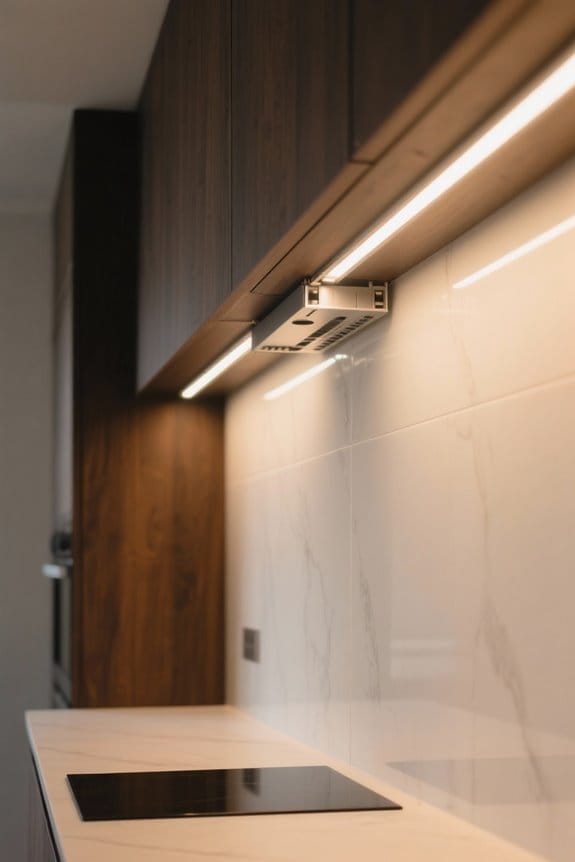


The 30-degree rule for accent aiming greatly enhances the visibility and detail of art pieces while minimizing glare. This technique employs ideal lighting conditions, requiring strategic positioning of light fixtures and angles, typically around 30 degrees. Implementing the setback formula aids in determining perfect fixture placement, allowing for consistent light distribution. By choosing high CRI fixtures and maintaining proper light levels, viewers appreciate the artwork’s true colors. Discover further insights on effective lighting practices by exploring additional resources.
Key Takeaways
- The 30-degree rule enhances artwork presentation by minimizing glare and improving visibility of details through optimal lighting angles.
- Accurate positioning of light fixtures is achieved using the setback formula (SD = EY x 0.6) to reduce shadows.
- Apply a beam angle of 30 degrees universally for all artwork types to enhance visibility without distortion.
- Energy-efficient LED fixtures with a high CRI (90+) ensure accurate color rendering, engaging viewers effectively.
- Smart lighting systems allow for dimming and adjustable angles to continuously optimize light intensity for art displays.
Understanding the Importance of Accent Aiming
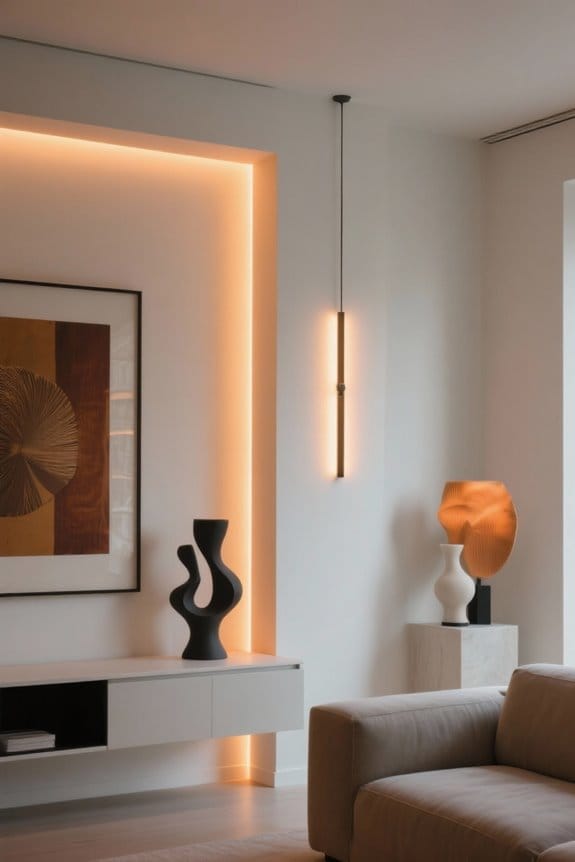
While many artists and curators focus on the artwork itself, understanding the importance of accent aiming is vital for ideal presentation. The 30-degree rule is a key technique that positions light fixtures at an angle to minimize glare and optimize visibility. This strategic illumination enhances the artwork’s details and textures, allowing viewers to experience the piece as intended. By controlling shadows and reflections, the 30-degree angle guarantees a professional presentation that maintains the integrity of the artwork. Additionally, achieving a Color Rendering Index (CRI) of 90 or above is essential for accurate color representation, creating a cohesive viewing experience. Implementing accent lighting effectively transforms exhibitions, elevating their impact and allure while capturing audience engagement. Incorporating energy-efficient solutions like LED picture lights can further enhance the display by providing adjustable brightness and color options, ensuring both sustainability and artistic expression.
The Science Behind the 30-Degree Rule
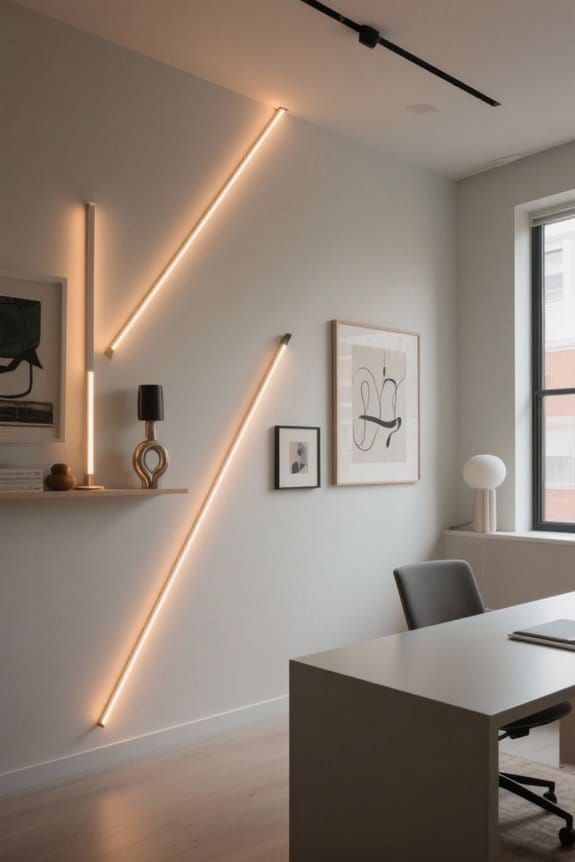
The science behind the 30-degree rule is rooted in the principles of light behavior and aesthetics, making it an essential guideline for effective artwork illumination. This aiming angle is ideal for minimizing glare while enhancing visibility and the intricate details of the artwork. By reducing specular reflections, particularly in glossy finishes like oil paintings, it preserves the piece’s true colors and textures. Additionally, the 30-degree rule promotes even light distribution across the artwork, preventing harsh shadows that distort its appearance. Angular lighting at this angle allows for a dynamic visual experience, showcasing dimensionality. Following this rule meets the aesthetic criteria and aligns with industry standards for museum-quality displays, ensuring effective light management that fosters the longevity of cherished artworks. LED technology promotes low energy consumption while enhancing the presentation of art, combining efficiency with aesthetic enhancement.
Tools for Measuring and Implementing Setback Formula
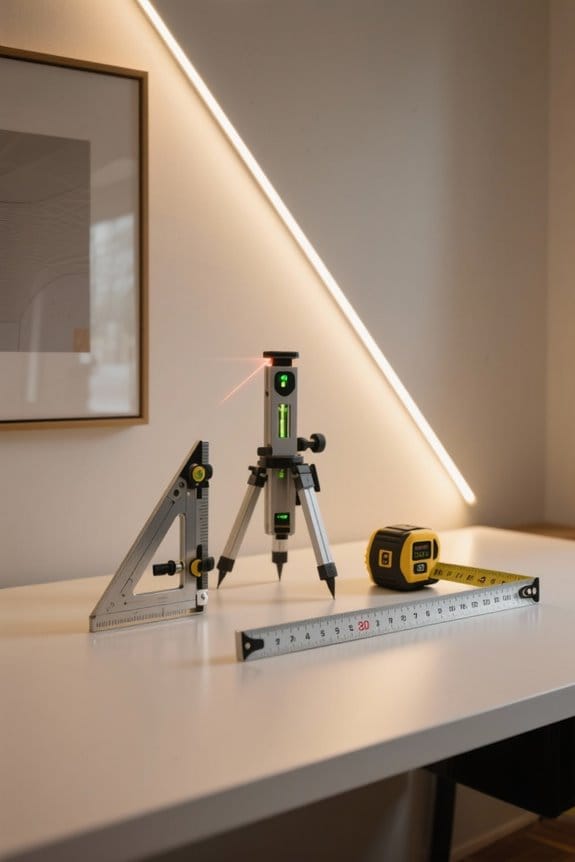
Achieving precise lighting angles while adhering to the 30-degree rule requires vital tools and a clear understanding of the setback formula. The formula, calculated as SD = EY x 0.6, dictates how far to position your light fixture based on the eye level height. Utilizing accurate measuring tools such as a laser level or a protractor can greatly enhance the implementation of this formula. These tools help guarantee the light strikes the artwork at the ideal 30-degree angle, maximizing color vibrancy and minimizing glare. By effectively managing ambient light, distractions such as reflections and shadows can be reduced, further emphasizing the artwork’s details and overall aesthetic impact. Consequently, investing in reliable measuring tools is essential for successful accent lighting. It’s also important to consider the color temperature versatility of your lighting fixtures, as this can greatly impact the ambiance and the true representation of colors in your artwork.
Recommended Products

【Class 1 Safety Certified Machine】This certified Class 1 cutting and engraving machine provides safety assurance for users at all levels, from beginners to professionals. Its smart enclosure integrates powerful features including smoke exhaust, laser blocking, auxiliary lighting, and safety interlock systems. The 360° fully-enclosed lid filters 99% of laser emissions, eliminating the need for additional enclosures or protective goggles. The laser module instantly deactivates when the lid is gently opened, ensuring continuous protection for both you and your artwork.

【Class 1 Safety Certified Machine】This certified Class 1 cutting and engraving machine provides safety assurance for users at all levels, from beginners to professionals. Its smart enclosure integrates powerful features including smoke exhaust, laser blocking, auxiliary lighting, and safety interlock systems. The 360° fully-enclosed lid filters 99% of laser emissions, eliminating the need for additional enclosures or protective goggles. The laser module instantly deactivates when the lid is gently opened, ensuring continuous protection for both you and your artwork.

Increases Productivity With Faster Setups, Fewer Mechanical Parts, And Automatic Self-Leveling
Best Practices for Lighting Different Types of Art
When considering the lighting of various types of artwork, understanding specific illumination needs becomes paramount for showcasing each piece effectively. Proper lighting for artwork involves targeting a beam angle of 30 degrees to minimize glare and enhance detail visibility. Oil paintings thrive under 150-200 lux, while watercolors and paper-based artwork require gentler illumination to prevent fading. For sculptures, adopting a multi-directional lighting technique using key, fill, and backlighting reveals form and texture thoroughly. Additionally, grazing light can dramatically illuminate textured artwork, ensuring depth without compromising color accuracy. When presenting framed artwork on the wall, incorporate anti-reflective glazing alongside the 30-degree angle aiming rule, effectively reducing reflections that obscure essential details while maintaining a natural appearance. For tasks that involve detailed crafting projects, utilizing a well-positioned LED magnifying desk lamp can enhance precision and clarity, ensuring that intricate details are visible and accurately represented.
Recommended Products
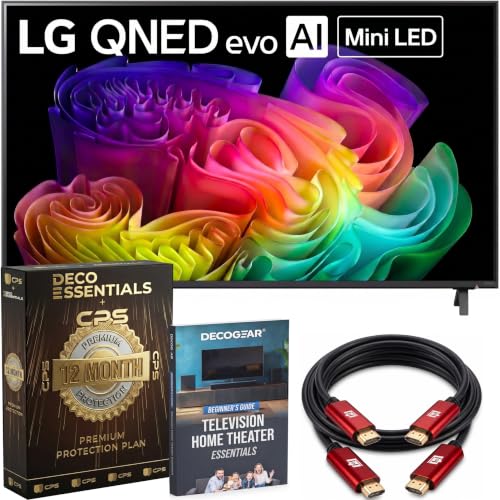
Elite Assurance: LG USA Authorized model which includes full USA warranty. Transform your living space into a luxurious, state-of-the-art cinema with the LG 100-Inch QNED evo AI Mini LED 4K Smart TV Bundle. Stripped of bulky borders with its architectural, minimal bezel design, this masterpiece display redefines premium home entertainment, meticulously paired with 1-Year CPS Enhanced Protection Pack ensuring your premium 4K Mini LED display remains a cinematic masterpiece for years to come.

Elite Assurance: LG USA Authorized model which includes full USA warranty. Transform your living space into a luxurious, state-of-the-art cinema with the LG 100-Inch QNED evo AI Mini LED 4K Smart TV Bundle. Stripped of bulky borders with its architectural, minimal bezel design, this masterpiece display redefines premium home entertainment, meticulously paired with 1-Year CPS Enhanced Protection Pack ensuring your premium 4K Mini LED display remains a cinematic masterpiece for years to come.

[LED‑Lighted Glass Display Cabinet]: Bright 48 inch glass display case with lights features a total of 9 integrated LEDs, including overhead and side lighting, to highlight collectibles, merchandise, or museum pieces.
Optimizing Fixture Selection for Accent Aiming
Selecting the right fixtures for accent aiming necessitates careful consideration of various factors that enhance the lighting experience. Effective accent lighting requires fixtures that provide adjustable beam angles, allowing precise targeting of artwork features and ensuring uniform brightness. When determining fixture selection, factors like eye height and ideal placement are vital; the formula SD = EY x 0.6 will effectively guide setback distance. Properly chosen light sources should minimize harsh shadows while enhancing artistic depth and maintaining overall visual aesthetic. Incorporating these elements into fixture selection helps create an engaging environment that showcases artworks without overwhelming viewers, making it essential for designers and curators to embrace these recommendations in order to achieve striking and functional illumination. For bathrooms, energy-efficient fixtures with high CRI ratings can also contribute to better color rendering and overall ambiance, aligning with the needs of both practical and aesthetic lighting.
Recommended Products

Blown glass pieces attached to a steel armature with light source inside, 1000 lumens LED. Glass chandelier using 100% hand blown murano glass in a beautiful colour with light transmission anti-scratch and heat dissipation, long lifetime. giving you crystal clear and fresh art feel.

【Tree Branch Ceramic Chandelier】The design of the modern chandelier is inspired by the shape of the ginkgo leaf in nature, making people feel the beauty of nature and the power of life. The gold chandelier creates an elegant, luxurious and vibrant atmosphere in the room, which is an ideal choice for home decoration.

LYRIQUE CHANDELIER DIMENSIONS: 15" High (Adjustable Height: 21" to 67") x 54.25" Wide, Ceiling Canopy: 5.13" x 5.13" x 0.75"; Weight: 9.13 lbs.
Placement Strategies for Achieving Ideal Angles
Effective placement strategies are pivotal in achieving the ideal 30-degree angle for accent lighting, as they can dramatically enhance the visual impact of an artwork. Careful light fixture placement guarantees that light meets the artwork at this prime angle, facilitating effective artwork illumination. To calculate the necessary setback distance, apply the formula Setback Distance (SD) = Eye Level (EY) x 0.6, which guides the precise positioning of fixtures. Consistent adherence to the 30-degree rule promotes a cohesive visual experience, particularly when showcasing multiple pieces. Additionally, this strategy minimizes harsh shadows, allowing for an even distribution of light that accentuates intricate details. Properly executed, these placement strategies transform an ordinary display into an engaging artistic journey, fostering viewer appreciation. Plug-in wall sconces with adjustable swing arms can be ideal for achieving such precise lighting angles, offering flexibility and ease of installation in various spaces.
Managing Glare With Proper Lighting Techniques
Managing glare is an important consideration in the effective illumination of artwork, as it directly impacts visibility and viewer engagement. Utilizing proper lighting techniques, such as aiming fixtures at a 30-degree angle, helps to minimize glare and redirect reflections away from viewers. This angle notably reduces distracting highlights on glossy surfaces, thereby enhancing the visual experience. Additionally, incorporating anti-reflective glazing can protect the artwork’s integrity while cross-lighting techniques bolster illumination effectiveness. Adjusting lighting conditions based on the artwork type is vital, particularly for textured pieces that require closer fixture positioning. Smart lighting systems featuring dimming capabilities allow for continuous optimization of light angles and intensity, ensuring visibility and managing glare effectively, making them a must-have for all art displays. Implementing no-neutral smart switches in smart lighting systems can further enhance ease of control and energy efficiency, making them suitable for homes without neutral wiring.
Recommended Products

ACCESS 2500+ WORKS OF ART: Access the best TV art collection through Samsung Art Store with 2500+ pieces from world-famous museums and artists like The Met, MoMA, Basquiat, Salvador Dali, and more *Fees apply to subscription service.

Art Gallery: The CanvasTV transforms any room into a curated gallery experience, displaying stunning artwork and photography when you're not watching. Choose from more than 1,000 complimentary curated works across styles and eras, or display your own photos and collections. Swap collections, rotate pieces and change the mood of any room. It's not just a TV. It's a piece of art.

World’s Thinnest “All-In-One” NXTFrame TV - Ultra-Slim Design is just 1.1” deep (1.2” for 85”), and the built-in chassis allows for simple installation without the need for an external chassis box.
Enhancing Textural Elements in Sculptures
To enhance the textural elements of sculptures, it is essential to contemplate the strategic application of light, as effective illumination can dramatically transform how viewers perceive three-dimensional artworks. Employing a 30-degree angle when illuminating sculptures is ideal, as it minimizes glare while revealing intricate surface details. Raking light can create dramatic shadows, accentuating textures and enhancing the visual appeal of materials. Multi-directional lighting, utilizing key, fill, and backlight techniques, is also vital for showcasing the depth and form of the artwork. Additionally, using low-heat LED fixtures helps maintain the integrity of delicate sculptures while ensuring they are well illuminated, thereby enriching the overall experience for viewers and highlighting the artistry behind each piece.
Integrating Smart Technology for Improved Art Aiming
The integration of smart technology in art lighting systems presents numerous advantages for enhancing the visual impact of sculptures and other artworks. By employing adjustable lighting and adhering to the ideal 30-degree rule, these systems effectively highlight essential details. Wireless protocols allow for seamless synchronization of multiple lighting fixtures, enabling coordinated adjustments across diverse art displays. Additionally, advanced dimming features facilitate glare mitigation, ensuring that viewers appreciate the artwork without distractions. Enhanced user experience is achieved through remote control options, permitting customization based on changing environmental conditions or artwork arrangements. With smart technology, art enthusiasts can transform their spaces, utilizing precise accent lighting not only to display art but also to elevate the overall ambiance of their galleries or homes. Furthermore, employing COB technology in lighting systems enhances lumens efficiency, reducing energy consumption and ensuring vibrant illumination for art displays.
Recommended Products

BRIGHTNESS BOOSTER MAX: The LG OLED evo shines even brighter than before. Brightness Booster Max technology magnifies each individual pixel for luminous quality that shines with every detail.

GLARE FREE WITH NEO QLED: With mini LEDs for precision lighting, our best Art TV picture delivers spectacular and immersive viewing. Enjoy your favorite shows without distracting reflections, allowing you to immerse yourself in the content—whether the sun is streaming through your windows or that one lamp is on while watching the latest thriller.

A PICTURE FRAME AESTHETIC WITH WIRELESS CONNECTION HUB**: Elevate any room with this stunning fusion of technology and artistry. Customizable bezels* let you choose your style, while the revolutionary wireless connection hub**, allows for flexibility in mounting options, free from unsightly cords and clutter.
The Long-Term Benefits of Proper Accent Lighting
Elevating the art of display through proper accent lighting offers a multitude of long-term benefits that can markedly enhance an art viewer’s experience. Employing the 30-degree angle technique considerably improves the visibility of artwork while minimizing glare, which fosters greater visual appreciation. Additionally, carefully designed lighting systems play an essential role in conservation, as they limit light exposure to sensitive materials, thereby preventing damage over time. Studies show that well-optimized lighting helps maintain vibrant colors, enhancing the overall appearance of art. Moreover, proper accent lighting reduces eye strain for viewers and lowers maintenance costs due to the longevity of efficient systems. Ultimately, utilizing these strategies maximizes the impact of art displays and cultivates a more engaging viewer experience. Outdoor pendant lights, made with weather-resistant materials, are durable and provide functional illumination, enhancing both security and aesthetics in various settings.
Frequently Asked Questions
What Is the 2 3 Rule in Art?
The 2:3 rule in art establishes two-dimensional composition, promoting aesthetic harmony. Statistically, artworks adhering to this ratio enhance viewer engagement and create visual hierarchy, utilizing effective storytelling through spatial arrangement, color contrast, and perspective techniques for artistic balance.
What Is the Best Color Temperature for Art?
The best color temperature for art ranges from 2700K to 5000K, fostering color harmony and enhancing visual impact. Proper lighting techniques influence emotional response, while ambient light maintains color balance in artwork presentation.
Which Principle of Visual Arts Creates a Focal Point of Interest by Accenting a Specific Area?
The principle of visual arts that creates a focal point of interest is subject emphasis. By utilizing color contrast, spatial dynamics, and compositional balance, artists enhance narrative focus and emotional resonance, fostering viewer engagement in line with artistic intention.
What Is an Accent Color in Art?
An accent color in art subtly enhances visual balance by employing tone variation and contrast impact. Through complementary colors from the color wheel, it evokes emotional response, ensuring thematic consistency and enriching overall color harmony.