
Gimbal recessed lights offer a must-have adjustability that enhances targeted illumination in various settings, making them ideal for accent and task lighting. In contrast, fixed recessed lights deliver consistent, uniform illumination, suitable for broader ambient lighting needs. When considering options, assess ceiling height, room function, and desired light direction. Gimbal lights adapt to architectural features, while fixed varieties maintain a balanced atmosphere. Exploring both options can reveal significant benefits for home and commercial spaces alike, leading to informed design decisions.
Key Takeaways
- Gimbal lights adjust for targeted illumination, making them ideal for accent and task lighting in various spaces.
- Fixed recessed lights provide consistent, widespread illumination, but lack the flexibility offered by gimbal options.
- Adjustable gimbal lights are effective for overcoming dark spots in sloped ceilings and highlight specific design elements.
- While gimbal lights may have a higher initial cost, they result in long-term savings through enhanced energy efficiency.
- Choosing between gimbal and fixed recessed lights depends on specific lighting needs, such as ceiling height and room functionality.
Understanding Gimbal and Fixed Recessed Lights
Recessed lighting has become an essential component of modern interior design, offering versatile solutions for various illumination needs. Among these solutions, gimbal lights and fixed recessed lights stand out for their distinct functionalities. Gimbal lights, featuring an adjustable mechanism, provide the ability to pivot and rotate, ideal for accent lighting and task lighting in spaces requiring focus, such as kitchens or art displays. In contrast, fixed recessed lights deliver consistent, widespread illumination, making them suitable for general ambiance in living areas and hallways. When selecting between these options, consider factors such as ceiling height, the specific function of the room, and desired light direction. This thoughtful approach guarantees best lighting performance and aesthetic appeal for any space. Notably, LED recessed downlights like the HALO and Ensenior trims offer energy efficiency and easy installation, making them a popular choice for both residential and commercial applications.
Key Differences in Functionality
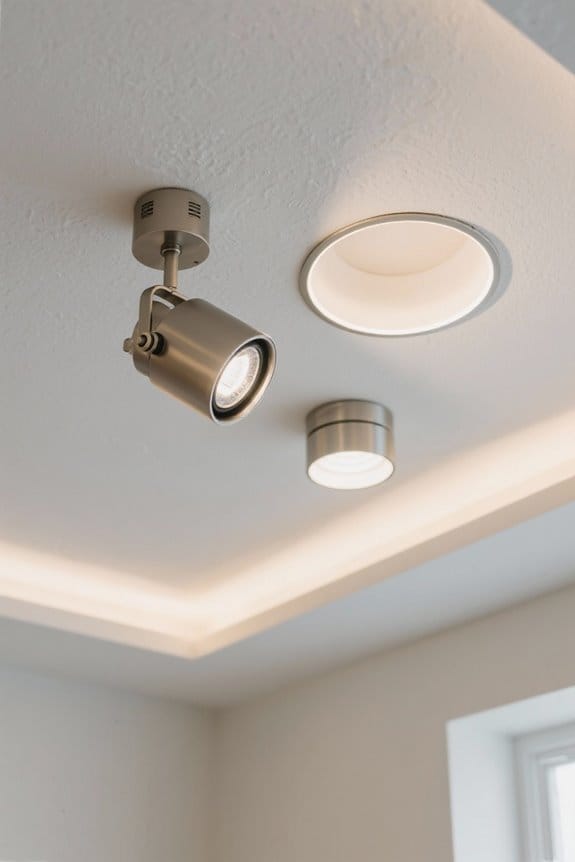
When comparing gimbal and fixed recessed lights, several key differences in functionality emerge that can influence lighting design choices. Gimbal lights offer the advantage of adjustability, allowing users to pivot and rotate fixtures for targeted illumination, making them perfect for accent and task lighting. In contrast, fixed recessed lights provide a steady angle and are primarily designed for ambient lighting, ensuring an even distribution of light across a space. The directional capabilities of gimbal lights enhance their versatility, allowing homeowners to adapt lighting based on varying heights or architectural elements. Conversely, fixed recessed lights lack this adaptability, focusing solely on consistent illumination. Understanding these differences is essential for selecting fixtures that align with specific lighting needs and overall aesthetic preferences. Additionally, energy-efficient models like the Maxxima Gimbal can significantly reduce utility bills while providing customizable lighting options.
Importance of Adjustability in Lighting
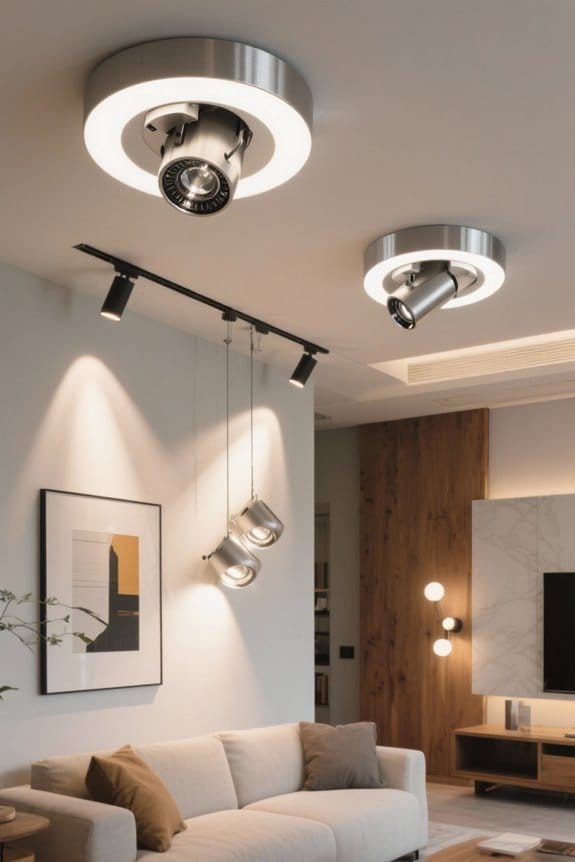
The significance of adjustability in lighting cannot be overstated, as it plays an essential role in enhancing both functionality and aesthetic appeal. Gimbal lights offer unparalleled adjustability in lighting, enabling users to direct focused illumination precisely where needed. This ability eliminates glare and guarantees even lighting, promoting visual comfort throughout a space. By accommodating architectural features or awkward layouts, adjustable gimbal lights easily highlight specific elements, such as artwork. Furthermore, their versatility allows a single fixture to serve multiple lighting roles, improving energy efficiency and reducing installation costs. Consequently, the adoption of gimbal lighting can transform interiors, making them more dynamic and tailored to the diverse needs of homeowners seeking effective and beautiful lighting solutions. In the realm of bathroom lighting, dimmable fixtures with brightness levels between 500 to 1000 lumens provide optimal task lighting, enhancing visibility for grooming activities while offering flexibility in lighting intensity.
Ideal Use Cases for Gimbal Lights
Gimbal lights stand out as an invaluable choice for various lighting scenarios, showcasing their versatility and effectiveness in numerous settings. Ideal for accent illumination, these lights can highlight artwork or architectural features with precision thanks to their 360-degree rotation and 30-degree tilt capabilities. In task-oriented spaces like kitchens or reading nooks, gimbal lights provide directed lighting, ensuring visibility where it is most needed. They are especially beneficial in open-concept areas, maintaining bright, even illumination without the clutter of hanging fixtures. Gimbal lights are also perfect for sloped ceilings, overcoming dark spots with their adjustable angles. With a high Color Rendering Index, they accurately represent colors, making them essential for display areas or galleries where true visibility matters. Many LED rope lights feature connectable designs, enabling users to link multiple strands to achieve extensive coverage, which enhances their flexibility in decorating spaces.
Recommended Products
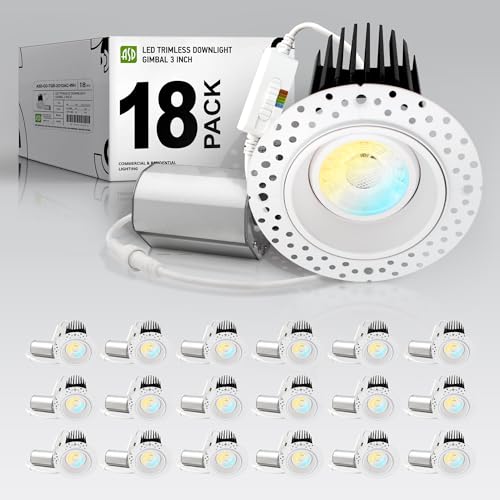
✅ TRUE TRIMLESS GIMBAL DESIGN - Create a seamless plaster-in ceiling with no visible trim while maintaining precise directional lighting control. This trimless 3 inch gimbal LED recessed light features an integrated mud-in frame that blends directly into drywall, delivering a clean architectural finish. Ideal for kitchens, living rooms, hallways, bathrooms, offices, hospitality projects, retail spaces, and modern interiors

CONSTRUCTION: Die-cast aluminum with 20-gauge steel driver box. Available in a White or Black finish and 2in, 4in, or 6in sizes. Lotos Adjustable has a 360 degree pivot hinge that allows the light source to adjust from 0-90 degrees perpendicular to the ceiling, ideal for accent lighting and sloped ceilings.

✅ TRUE TRIMLESS GIMBAL DESIGN - Create a seamless plaster-in ceiling with no visible trim while maintaining precise directional lighting control. This trimless 2 inch gimbal LED recessed light features an integrated mud-in frame that blends directly into drywall, delivering a clean architectural finish. Ideal for kitchens, living rooms, hallways, bathrooms, offices, hospitality projects, retail spaces, and modern interiors
How Fixed Recessed Lights Enhance Ambiance
Fixed recessed lights serve as a sophisticated solution for enhancing ambiance in various interior spaces. These lighting fixtures provide uniform illumination, making them particularly effective in living rooms, kitchens, and hallways. By maintaining a set position, fixed recessed lights deliver consistent light output that contributes to a well-balanced atmosphere. Their wide beam angle effectively eliminates harsh shadows, creating a welcoming environment. Additionally, the sleek and minimalist design of fixed recessed lights promotes a clean aesthetic, blending seamlessly into the ceiling without adding visual clutter. When strategically installed, they achieve balanced lighting throughout a room, minimizing dark spots and reducing visual fatigue. Consequently, fixed recessed lights are an essential component for improving ambiance and overall visual appeal in any home. For those seeking energy efficiency, LED options can significantly reduce energy consumption compared to traditional incandescent bulbs.
Lighting Design Considerations for Various Spaces
Choosing the right lighting design for various spaces can greatly impact both functionality and aesthetic appeal. In environments with sloped ceilings, adjustable Gimbal Recessed lights pivot to guarantee ideal illumination, effectively eliminating hot spots. These fixtures are ideal for open-concept areas, allowing targeted task lighting for specific functions, such as cooking or reading, without cluttering the design. For showcasing artwork or architectural details, gimbal lights can provide focused light, enhancing visual interest. Additionally, in multifunctional rooms, they enable versatile arrangements that accommodate ambient light for relaxation and focused light for activities. By selecting adjustable lighting solutions, homeowners can create dynamic, stylish environments tailored to their needs while maximizing space efficiency. Energy-efficient options save up to 90% on energy costs while delivering high lumens, making them an excellent choice for environmentally conscious homeowners.
Factors Influencing Your Choice
When considering the ideal lighting solution for a space, several factors significantly influence the decision-making process. Ceiling height is essential; higher ceilings benefit from gimbal lights, providing focused illumination without dark spots. For areas requiring versatile task lighting, gimbal recessed lights excel in pivoting to direct light where needed, unlike fixed downlights, which only offer ambient lighting with uniform distribution. Moreover, sloped ceilings necessitate gimbal lights to guarantee even illumination and minimize glare. Additionally, gimbal lights typically require fewer fixtures for equivalent light output, making them a smart choice in high-demand situations. Finally, for spaces that highlight artwork or architectural features, the adjustability of gimbal lights creates the directional capabilities vital for effective accent lighting. For customizable lighting, dimmable options enhance the fixture’s functionality, providing flexibility in brightness.
Budget Implications of Gimbal Vs Fixed Options
Budget constraints often play an essential role in the decision between gimbal and fixed recessed lighting options. The initial purchase price of fixed recessed lights is typically lower; however, they often require more fixtures for sufficient lighting. This can lead to higher installation costs and potentially greater expenses down the line. On the other hand, LED gimbal lights provide targeted lighting and aesthetic flexibility, justifying their higher upfront cost with enhanced functionality. Additionally, energy-efficient gimbal lights greatly reduce electricity costs and potentially lower maintenance expenses, resulting in long-term savings. Homeowners should carefully evaluate these budget implications, considering both immediate expenses and future costs, when deciding between gimbal and fixed recessed lighting solutions for their spaces. Many smart bulbs offer energy-saving benefits, aligning with the trend of reducing long-term costs through efficient lighting solutions.
Recommended Products

Rotatable Spotlight: 4-inch gimbal recessed lighting with an adjustable angle, featuring 360° rotation and 30° swivel. It features a regressed design that reduces unwanted side glare and light spread for more precise beam direction, along with a 38° beam angle and airtight construction to minimize air leakage. Finished in round white. Cutout: 4.31".

✅ TRUE TRIMLESS GIMBAL DESIGN - Create a seamless plaster-in ceiling with no visible trim while maintaining precise directional lighting control. This trimless 2 inch gimbal LED recessed light features an integrated mud-in frame that blends directly into drywall, delivering a clean architectural finish. Ideal for kitchens, living rooms, hallways, bathrooms, offices, hospitality projects, retail spaces, and modern interiors

5 COLOR OPTIONS - Not sure what color temperature to choose for your home recessed ceiling lights? Each LED can light has a simple to use switch that can change your lights to 2700K warm white, 3000K soft white, 3500K natural white, 4000K cool white, or 5000K bright white. Your home recessed lights will be adjustable through 5 color temperatures until you find the one that perfectly suits your space.
Environmental and Energy Efficiency Considerations
With a growing emphasis on environmental sustainability, the choice between gimbal and fixed recessed lighting increasingly hinges on energy efficiency. Gimbal recessed lights offer superior energy performance, requiring fewer fixtures to achieve the same levels of illumination. This efficiency reduces overall energy consumption while minimizing the environmental impact. LED lights, particularly gimbal recessed options, extend lifespans, operate at lower wattages, and contribute to reduced carbon footprints. The adjustability of gimbal lights allows homeowners and businesses to direct light precisely where needed, reducing light pollution and waste. In addition, by optimizing natural daylight during the day, energy savings on artificial lighting are enhanced. This strategic focus promotes sustainable practices in both residential and commercial settings, making gimbal recessed lights a must-have for the eco-conscious consumer. Furthermore, selecting fixtures with a high color rendering index (CRI) ensures accurate color representation, which enhances the quality of light in any environment.
Recommended Products for Your Lighting Needs
Choosing the right lighting products can markedly elevate any space, enhancing both functionality and aesthetic appeal. For those seeking versatility, the NuWatt Adjustable LED Recessed Lights are a must-have. With 360-degree rotation and 30-degree tiltable beams, these gimbal lights offer customizable illumination perfect for accentuating architectural features or artwork. Alternatively, the 3 Inch Square Black Gimbal Recessed Light, priced at $24.99, presents 5CCT selectable color temperatures and delivers 600 lumens of brightness. For a more uniform look, standard fixed recessed lights provide ambient illumination without directional capabilities, making them ideal for living areas. When evaluating options, carefully consider your specific lighting needs based on room design, functionality, and desired atmosphere to maximize impact. Additionally, consider the inclusion of ambient lighting strips, such as the Govee RGBIC Smart LED Strip Lights, which feature interactive color options and smart control capabilities to further enhance your space.
Frequently Asked Questions
What Is the Difference Between Gimbal and Recessed Lights?
What sets gimbal recessed lights apart? Gimbal flexibility allows directional lighting, enhancing aesthetic appeal and lighting intensity, while fixed lights excel in consistent illumination. Both offer energy efficiency, yet gimbal fixtures often present a more complex installation process.
What Type of Recessed Lighting Is Best?
The best type of recessed lighting depends on specific needs. Consider LED options, installation tips, lighting colors, energy efficiency, design aesthetics, maintenance requirements, and cost considerations for ideal illumination tailored to each space’s function.
What Is the Best Beam Angle for Recessed Lighting?
Selecting beam angles for recessed lighting is a thrilling endeavor! Narrow beam benefits shine in accenting art, while wide beam advantages envelop spaces with ambient light effects. Consider task lighting needs and room size for ultimate brilliance.
What Is the Most Popular Trim Used With Recessed Lighting?
Round trims are the most popular choice for recessed lighting due to their versatile trim styles, compatibility with various lighting colors, and adaptability for different ceiling heights and room sizes, promoting energy efficiency and ease of installation.