
Art wall planning requires a thoughtful balance between uniformity and dramatic accents in design. A consistent color palette of 2-3 shades fosters cohesion, while varied frame styles and sizes can introduce engaging contrasts. Creating visual harmony is essential; consider spacing elements 2-4 inches apart for breathing room. Use texture and lighting to enhance impact and draw attention to focal pieces. This balanced approach transforms art walls into enchanting displays that reflect personal taste, highlighting the emotional weight of art. Discover additional strategies to elevate your art wall design.
Key Takeaways
- Uniformity in frame styles and colors fosters a cohesive, harmonious look in art walls that can feel calming and structured.
- Dramatic accent pieces, such as bold colors or larger artworks, can serve as focal points, drawing attention and adding visual interest.
- A balanced approach combines uniformity and accents, using consistent colors with striking contrasts to create an engaging visual atmosphere.
- Negative space plays a crucial role; using it strategically allows both uniform pieces and dramatic accents to shine individually.
- Tailoring choices to the room’s theme enhances overall decor, whether leaning towards uniformity for serenity or dramatic accents for vibrancy.
Understanding the Role of Art in Home Decor
While it may seem that furniture and flooring primarily define a home’s aesthetic, art plays a pivotal role in enhancing the overall decor. Art serves as focal points that draw the eye, creating visual interest and engaging occupants. A well-planned art arrangement, such as gallery walls, can transform spaces into dynamic reflections of personal taste. By maintaining a cohesive color palette when selecting art pieces, homeowners can unify different styles, contributing to visual harmony. Additionally, considering scale, orientation, and spacing prevents overcrowding, allowing each piece to shine. Incorporating various art styles—from bold abstracts to classic oil paintings—enriches home decor, aligning with current decor trends and inviting a layered, inviting atmosphere throughout the residence. When planning art displays, homeowners can enhance comfort and convenience by integrating smart dimmer switches, offering customizable lighting that complements art pieces and enhances their visual appeal.
The Importance of Visual Harmony in Art Walls

Visual harmony is essential in creating an art wall that captivates and engages viewers, as it allows a collection of diverse pieces to coexist seamlessly. Achieving this unity begins with a cohesive color palette, guaranteeing that the artworks feel connected rather than chaotic. Incorporating varying sizes, orientations, and styles can generate engaging movement, drawing the viewer’s attention to focal points. Essential to art wall planning is the use of negative space, offering breathing room and creating balance. Utilizing consistent framing styles establishes a streamlined aesthetic that enhances the overall décor. Additionally, strategically placing larger pieces at eye level guarantees they serve as anchors, guiding the viewer’s eye and fostering harmony throughout the art wall. To elevate the visual appeal, consider using adjustable brightness settings to highlight specific features of your artwork, creating an ambiance that can be tailored to various occasions.
Exploring Different Art Styles
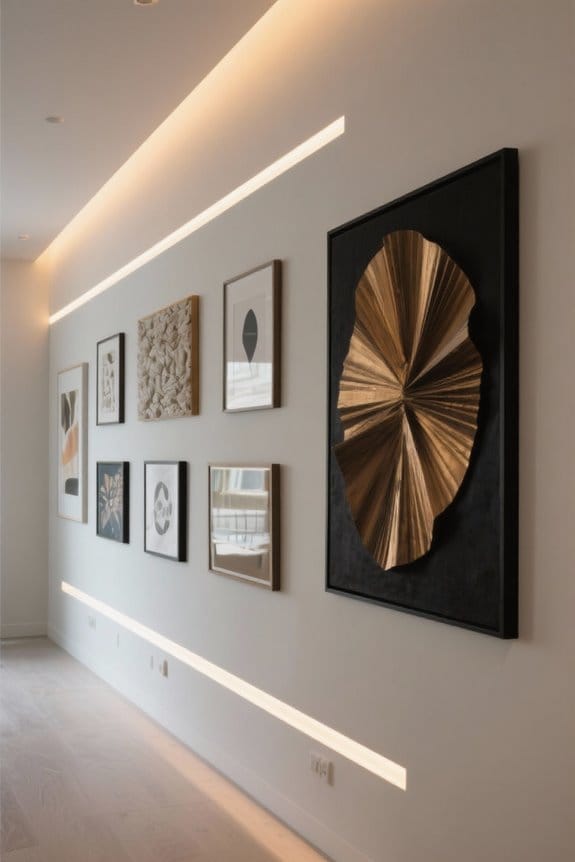
Creating an art wall offers an opportunity to showcase various art styles, each contributing unique aesthetics and emotional resonance. For instance, Abstract Art employs vibrant colors and dynamic forms, making it a fascinating choice. Classic Oil Paintings introduce rich textures and a historical touch, enhancing the ambiance. Photography is favored for its realism, often employing strong contrast for effective visual storytelling. Graphic Art, with modern design elements and typography, adds contemporary flair, while Art Nouveau features ornate patterns that evoke elegance. Funky Geometrics inject sharp lines and bold shapes for a modern twist. Finally, the surging trend of Dopamine Decor emphasizes bright colors and fun patterns, embodying the goal of creating energetic and uplifting environments in interior decor. Incorporating a Crystal Raindrop Chandelier complements these art styles by adding a touch of elegance and enhancing the overall ambiance of the space.
Creating Cohesion Through Color and Frame Selections
Establishing cohesion in an art wall is essential for achieving a polished and inviting aesthetic, as the right combination of color and framing can profoundly enhance the overall impact of a space. Selecting a consistent color palette featuring 2-3 complementary shades promotes harmony among artwork. Pairing matching frames or adopting a uniform framing style visually ties pieces together, fostering cohesion. Balancing visual weight is vital; larger pieces should dominate while smaller ones provide support. Incorporating texture variations, such as blending framed photographs with textile wall hangings, introduces depth while maintaining a unified appearance. By thoughtfully considering color and frame selections, one can create a cohesive art wall that captures attention and reflects personal style, fulfilling a must-have aspect of interior decor. Adding elements like energy-efficient LED bulbs from tree-style floor lamps can enhance the ambiance and illumination of an art wall, providing both functionality and aesthetic appeal.
Techniques for Effective Artwork Arrangement
When considering the arrangement of artwork, starting with a central piece serves as an effective strategy for establishing a focal point. It acts as an anchor for the art wall, guiding the overall artwork arrangement. Employ various arrangement styles, such as symmetrical, asymmetrical, or grid layouts, while ensuring consistent spacing between frames—typically 2 to 4 inches apart—to achieve a polished look. Aim to hang artwork at eye level, about 57-60 inches from the floor, enhancing viewer engagement. Additionally, maintain a cohesive look by positioning art 6 to 12 inches above furniture. Consider power source options like USB or battery for versatility in placement of LED mirror light strips to enhance the artwork arrangement. Experiment with different heights and orientations, mixing sizes and styles to enhance visual interest while ensuring a unified theme across the arrangement for an effective layout.
Balancing Dramatic Accents With Uniformity
Achieving a harmonious design that balances dramatic accents with uniformity is essential in creating an engaging art wall. A cohesive color palette forms the foundation for this balance, enabling bold, standout pieces to emerge as focal points within the decor. Including a combination of consistent frame styles enhances uniformity, while large, distinctive art pieces provide visual interest and depth. Arranging art in a symmetrical layout can create a sense of order, while strategically placed accents can introduce dynamism. The juxtaposition of smaller, uniform pieces against a larger dramatic accent fosters visual harmony. Additionally, incorporating varied materials, such as textiles or three-dimensional objects, alongside traditional wall art guarantees that the overall decor remains cohesive and visually alluring, enhancing the overall aesthetic. Selecting eco-friendly materials in design not only contributes to a sustainable living environment but also enhances air quality while adding charm to your home.
Common Mistakes to Avoid in Art Wall Planning
Creating an art wall that captivates the eye requires careful planning, but there are common mistakes that can hinder the overall effect. One significant error is overcrowding the space, which limits each piece’s ability to shine; guarantee enough breathing room between artworks. Additionally, hanging pieces at inconsistent heights disrupts visual harmony; aim for a consistent height of 57 to 60 inches for peak visibility. Establish a cohesive theme by unifying frame styles or color schemes to avoid chaos. Consider the relationship with surrounding furniture, guaranteeing artwork complements rather than competes for attention. Finally, failing to visualize the layout before hanging leads to a cluttered appearance. Experiment with paper cutouts on the wall for the best arrangement, emphasizing each artwork’s personal touch. Incorporating smart lighting control with dimmer switches can elevate the ambiance of your art wall, allowing you to tailor illumination to highlight specific pieces and enhance their visual impact.
Utilizing Negative Space for Enhanced Aesthetics
Incorporating negative space into art wall planning serves as a fundamental strategy for enhancing the aesthetic appeal of any display. Negative space refers to the empty areas surrounding artwork that improve visual impact, allowing each piece to breathe and engage viewers without heaviness. By strategically spacing artwork two to four inches apart, one can effectively achieve balance and organization, preventing cluttered displays. This careful negative space utilization highlights focal points, ensuring that significant pieces capture attention amidst smaller works. Additionally, in rooms with high ceilings, the thoughtful arrangement of empty areas creates a dynamic visual experience, drawing the eye upward. Moisture-resistant materials are essential for bathroom vanity lights, ensuring durability in humid environments. Consequently, recognizing the importance of negative space can transform an ordinary arrangement into a striking visual narrative.
Personal Experiences in Art Placement
While exploring personal experiences in art placement, individuals often discover the transformative power of carefully selected pieces within their living spaces. The integration of personal photos, unique pieces from thrift stores, and artworks by local artisans cultivates a warm atmosphere. Homeowners often endeavor for visual harmony, rearranging decor choices to guarantee a balanced composition. Remarkably, the emotional impact of specific artworks on family members, especially children, plays an essential role in placement decisions. Embracing seasonal themes through display updates allows spaces to remain dynamic and inviting. Engaging with diverse art, from cherished souvenirs to striking creations, not only personalizes environments but also connects with shared memories, ultimately enhancing the overall aesthetic experience within the home. When planning outdoor lighting, considering weather resistance for durability is crucial to ensure fixtures withstand environmental challenges and maintain their aesthetic appeal over time.
Gathering Inspiration From Real-Life Examples
Real-life examples offer valuable insights for those looking to enhance their own art wall planning. One effective illustration is a Portland living room featuring a grid layout that artfully combines single pieces and a diptych, creating a striking visual story. In contrast, an LA bedroom utilizes a large piece alongside mirrors and sculptures, fostering depth and aesthetic variance. Kids’ rooms can embrace gallery walls by integrating smaller matching pieces with playful 3D elements, promoting cohesive decor. An old bedroom showcases the charm of mixed stacks and diptychs, reflecting personal preference. Finally, a family basement transforms into a vibrant playroom with an anchor piece complemented by diverse artworks, demonstrating how thoughtful arrangements enliven functional spaces. To enhance such arrangements, incorporating versatile designs like farmhouse wall sconces can provide both aesthetic appeal and functional lighting solutions, making art wall planning even more impactful.
Practical Tips for Mixing Frame Styles
Mixing frame styles can greatly enhance the visual appeal of any art wall, creating an engaging focal point in the room. To achieve visual interest, select 2-3 frame styles that share a similar color palette, ensuring cohesion in your art display. Varying the size and orientation of frames while maintaining consistent spacing of 2-4 inches between them will introduce a dynamic quality to the arrangement. Consider incorporating diverse matting styles; wider mats can lend elegance to sleek, narrow frames. Additionally, tailor your frame choices to the theme of the room—eclectic frames bring warmth to casual spaces, while clean, minimalist frames suit contemporary settings. Embrace mixing frames for a personalized and visually striking art display.
The Impact of Art on Emotional Well-being
Art holds a profound influence on emotional well-being, serving as a catalyst for positive change in individuals’ lives. Research indicates that art helps enhance mood while reducing stress and anxiety, thereby promoting overall emotional health. Engaging with different artistic styles not only sparks creativity but also triggers dopamine release, heightening feelings of happiness. In environments enriched with art, individuals often find a greater sense of purpose and fulfillment, reinforcing self-identity and individuality. Furthermore, art therapy utilizes creative expression to effectively address various mental health issues, demonstrating the transformative power of aesthetics. Strategically placing a focal point of enthralling artwork in one’s personal space can elevate the mood, making art a must-have for cultivating emotional well-being in everyday environments.
Frequently Asked Questions
What Are the Three Main Categories of Representation in Art?
The three main categories of representation in art include realistic representation utilizing realism techniques, abstract representation emphasizing emotional expression and conceptual art, and non-representational art focusing on symbolic imagery and experiential engagement through aesthetic appreciation and visual metaphors.
What Are the Four Artistic Styles?
The four artistic styles—abstract expressionism, classical realism, modern minimalism, and pop art—each showcase unique characteristics. These styles utilize surrealist techniques, cubist influences, impressionist colors, digital artistry, and cultural symbolism to deepen landscape interpretation.
How Do You Know if an Artwork Has Unity or Harmony?
To determine unity or harmony in artwork, one should analyze artistic balance, color theory, and composition principles. Visual rhythm, thematic consistency, texture variety, emotional resonance, scale significance, and contrast elements all contribute to the overall effect.
What Are the Four Aspects of Formal Analysis in Art?
In art, the four aspects of formal analysis encompass line dynamics, shape analysis, color theory, and texture evaluation. Together, they illuminate visual elements and element relationships, enhancing composition structure, balance assessment, and revealing artistic intentions.