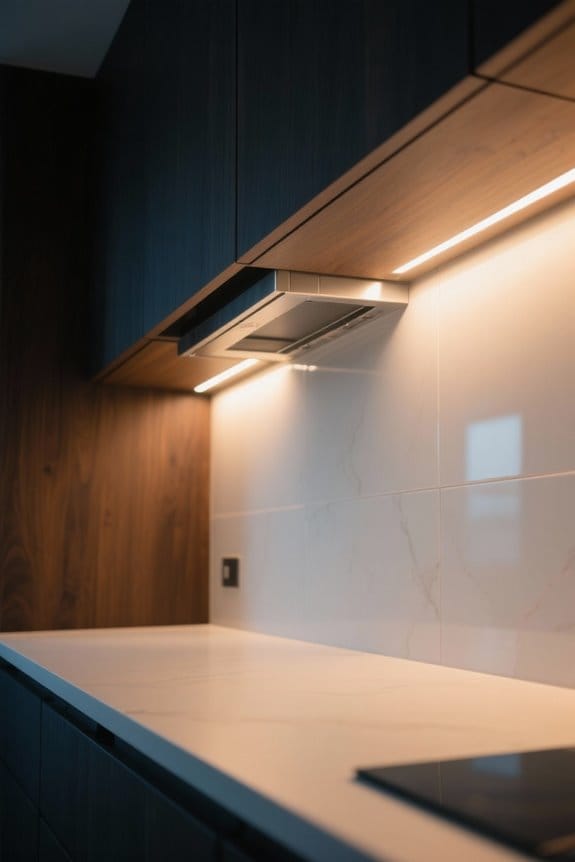


Choosing the right correlated color temperature (CCT) considerably impacts each room’s atmosphere. For living rooms and bedrooms, warm white light (2700K-3000K) creates inviting spaces ideal for relaxation. In kitchens and workspaces, neutral white light (3500K-4000K) enhances focus and reduces eye strain. Cool white light (5000K and above) energizes areas like classrooms or retail spaces. Understanding these recommendations helps create functional environments. Explore how specific CCT applications can elevate your home or workspace effectively.
Key Takeaways
- Use warm white lighting (2700K-3000K) in bedrooms and living areas for a cozy and inviting atmosphere.
- Implement neutral white lighting (3500K-4000K) in kitchens and dining spaces for clarity during food preparation and meals.
- Opt for neutral CCT (3500K-4000K) in office environments to enhance focus, alertness, and reduce eye strain.
- Select cooler white lighting (4000K-5000K) in bathrooms for effective grooming tasks, simulating natural daylight.
- For retail settings, blend warm and cooler CCTs to enhance product visibility and customer engagement.
Understanding Correlated Colour Temperature (CCT)
Understanding the nuances of Correlated Colour Temperature (CCT) is essential for effective lighting design in any space. CCT measures the color appearance of light, with warm tones (2700K-3000K) emitting a cozy, inviting glow, ideal for relaxing environments like living rooms. Conversely, neutral temperatures (around 4000K) enhance clarity, making them suitable for task-oriented areas such as offices. Cool temperatures, which begin at 5000K, simulate daylight, promoting alertness—beneficial in healthcare and industrial settings. When selecting light sources, consider the desired atmosphere; warm tones create comfort while cooler tones enhance productivity. By strategically choosing CCT, designers can transform spaces, ensuring that every room serves its intended purpose effectively and invitingly. Energy-efficient recessed lights help save on utility bills while providing versatile lighting options to suit various CCT preferences.
The Importance of Choosing the Right CCT

Selecting the appropriate Correlated Color Temperature (CCT) for a space dramatically influences its atmosphere and functionality. Understanding CCT options is crucial; warmer colors (2700K-3000K) create cozy environments suitable for living rooms, while cooler temperatures (5000K and above) boost alertness and focus in offices. For the desired ambiance, neutral light (3500K-4000K) balances warmth and clarity, enhancing productivity in work settings. Retailers should consider emotional responses; warm lighting enhances boutique product appeal, while cooler tones instill modernity in larger shops. When choosing lighting fixtures, opting for energy-efficient LED options can save on energy costs and provide bright lighting with a long lifespan. Ultimately, the right CCT choice enhances the user experience, greatly increasing comfort and aesthetic enjoyment across various environments. Careful consideration of CCT can turn an ordinary space into an inspiring one, strongly impacting daily interactions and overall satisfaction.
Warm White Light: Creating Cozy Environments

When aiming to create a cozy ambiance in residential and hospitality spaces, warm white light, with a color temperature ranging from 2700K to 3000K, stands out as a preferred choice. This lighting option enhances rich colors and textures of fabrics, promoting a snug, inviting atmosphere. In intimate spaces such as bedrooms, living rooms, and restaurants, warm white light works marvelously, fostering emotional well-being through its soft lighting characteristics. Its gentle, yellowish glow effectively softens harsh shadows, making it flattering for skin tones while enhancing overall comfort. By carefully selecting warm white lighting, designers can create environments that feel homely and welcoming, ensuring that both occupants and guests experience a sense of relaxation and tranquility throughout the space. Dimmable options are available with compatible bulb types, allowing flexibility in choosing energy-efficient lighting solutions.
Neutral White Light: Enhancing Focus and Clarity
Clarity in workspace design is essential, especially in environments where focus and productivity are paramount. Neutral white light, with a color temperature between 3500K and 4000K, serves as an excellent choice for task lighting in offices and classrooms. This versatile lighting strikes a balance between warm and cool tones, creating a bright and comfortable atmosphere that minimizes eye strain. Its ability to enhance concentration promotes alertness, making it invaluable in study areas or collaborative spaces. Additionally, neutral white light complements various colors and materials, ensuring clarity without the harshness often associated with cooler temperatures. By implementing neutral white lighting, designers can greatly improve productivity, fostering an engaging environment that boosts both mood and overall performance. When selecting smart bulbs for such environments, energy-efficient LEDs with long lifespans and customizable settings can further enhance the user experience.
Cool White Light: Boosting Energy and Productivity
Cool white light plays a pivotal role in enhancing energy levels and productivity, making it a must-have for dynamic workspaces and educational settings. Typically ranging from 4000K to 6500K, this color temperature stimulates alertness and concentration, boasting a productivity increase of about 20% in offices and classrooms. The blue-rich spectrum mimics natural daylight, helping regulate circadian rhythms, which promotes overall well-being during daytime activities. Additionally, cool white light reduces eye strain by providing clear visibility, essential for detail-oriented tasks like reading and technical work. Incorporating this lighting in commercial spaces, such as retail stores, further enhances product visibility and attracts customer attention, fostering a modern ambiance that encourages purchasing decisions. For added convenience and energy efficiency, consider using smart bulbs like Philips Hue with your lighting setup to customize brightness and color settings.
CCT Recommendations for Living Rooms
Creating a warm and inviting atmosphere in living rooms is essential for fostering relaxation and social interaction. For ideal comfort, a warm color temperature of 2700K to 3000K is recommended, as it creates a cozy environment perfect for unwinding with family or friends. This lighting enhances rich fabrics and deep wood tones, showcasing the intricate details of furniture and décor. Additionally, incorporating a neutral CCT around 3500K can promote clarity and balance, suitable for diverse activities like reading or playing games. Layering both warm and neutral lighting through various fixtures adds depth and visual interest, accommodating different moods and purposes. Avoid cooler CCTs (5000K and above) to maintain the cozy ambiance typically desired in living spaces. To maximize energy efficiency in lighting, consider using LED lamps which offer significant electricity savings and a long lifespan.
CCT Recommendations for Bedrooms
Bedrooms serve as personal sanctuaries, where lighting plays an essential role in establishing a serene and inviting environment. A warm color temperature of 2700K to 3000K is recommended to create a cozy atmosphere, ideal for unwinding and promoting relaxation. Using warm light mimics the calming qualities of candlelight, which supports the Circadian Rhythm and enhances sleep hygiene by reducing blue light exposure. For activities like reading, neutral tones around 3500K provide an uplifting clarity while maintaining warmth. Layering different CCTs, such as warm and cooler CCTs, can cater to various moods and functions, creating spaces suitable for intimate evenings or invigorating mornings. LED lighting, known for its energy efficiency, is a preferred choice for bedroom lighting as it not only saves on electricity bills but also offers customizable brightness and color temperature options. Ultimately, thoughtful lighting choices contribute greatly to bedroom comfort and functionality.
CCT Recommendations for Home Offices
While working from home offers flexibility and comfort, the importance of choosing the right color correlated temperature (CCT) for a home office cannot be overstated. Neutral white lighting, ranging from 3500K to 4000K, enhances focus and reduces eye strain during prolonged tasks. Incorporating cooler tones above 4000K can energize the workspace, mimicking natural daylight and promoting alertness. A balance of adjustable lighting fixtures helps adapt to various tasks throughout the day as natural light fluctuates. In the evening, consider warm white lighting between 2700K and 3000K to foster relaxation. Additionally, prioritize high Color Rendering Index (CRI) values of 90 or above to guarantee color accuracy, which is essential for design-oriented tasks. Adjustable LED downlights generally last between 25,000 to 50,000 hours, making them a durable and long-lasting option for home offices.
CCT Recommendations for Kitchens
In the bustling heart of the home, the kitchen serves as both a culinary workspace and a social gathering spot, making the choice of color correlated temperature (CCT) essential for enhancing functionality and comfort. A recommended CCT of 3000K creates a warm and inviting atmosphere, perfect for family gatherings and cooking. For task-oriented areas, consider cooler temperatures around 4000K to provide clear visibility for detailed food preparation. Specifically, using warmer lighting (2700K-3000K) over kitchen islands promotes a cozy feel when entertaining guests. Balancing task and ambient lighting is critical; combining these CCTs allows for an adaptable environment. Adjustable lighting options are a must-have, enabling homeowners to shift from warm tones for dining to cooler tones for meal prep efficiently. For those seeking efficient solutions, energy-efficient LEDs can significantly reduce electricity bills while maintaining optimal brightness levels for kitchen tasks.
CCT Recommendations for Bathrooms
Creating the right atmosphere in a bathroom can greatly enhance comfort and functionality. For ideal lighting, a CCT of 3000K to 3500K is recommended, providing a warm and inviting ambiance. Warmer color temperatures, around 2700K to 3000K, are perfect for relaxing spa-like settings. In contrast, neutral lighting at 3500K to 4000K improves visibility for grooming tasks, minimizing shadows while ensuring accurate color representation. For more functional areas, such as makeup application, cooler temperatures between 4000K to 5000K can effectively mimic daylight. Additionally, it is essential to choose fixtures with a high CRI of 90 or above, ensuring skin tones and colors appear true to life under bathroom lighting, enhancing overall usability and aesthetic appeal. Smart dimmers appeal to tech-savvy homeowners, offering customizable settings that can adjust the lighting CCT to meet specific needs and preferences.
CCT Recommendations for Outdoor Spaces
Outdoor lighting serves as both a functional necessity and a design element that enhances the overall beauty of spaces outside the home. For residential areas, a warm CCT of 3000K is ideal, creating a welcoming atmosphere that promotes relaxation and safety. In security and parking areas, cooler CCTs, ranging from 4000K to 5000K, are often utilized to enhance visibility and alertness for users. Meanwhile, pathways benefit from neutral CCTs around 3500K-4000K, offering sufficient illumination without harshness, ensuring safety while walking. When selecting outdoor lighting, it’s essential to take into account the architecture and landscape, harmonizing the chosen CCT with surroundings to create an inviting and secure outdoor environment that meets both aesthetic and practical needs.
Practical Tips for CCT Selection in Different Rooms
Lighting selection plays an essential role in enhancing the functionality and ambiance of various rooms within a home. For bedrooms and living areas, warm white lighting (2700K-3000K) is ideal for creating a cozy atmosphere, promoting relaxation. In kitchens and dining areas, neutral white lighting (3500K-4000K) enhances visibility and energizes meal preparation, catering to specific needs. Office spaces benefit from this neutral range as well, enhancing focus while minimizing eye strain during work. Bathrooms require cooler white lighting (4000K-5000K), mimicking natural daylight, which is pivotal for grooming activities. Retail settings often blend warm and cooler white lighting, creating inviting boutique-like atmospheres while effectively showcasing products. These strategic choices guarantee each room fulfills its intended purpose effectively.
Frequently Asked Questions
What Is the Best CCT for a Bedroom?
For ideal bedroom ambiance, a CCT between 2200K and 3000K enhances sleep quality through color psychology. Lighting layers and thoughtful fixture selection cater to personal preference, creating a serene environment conducive to relaxation and rest.
What Is the 5 7 Lighting Rule?
The 5-7 lighting rule emphasizes using multiple fixture types and brightness levels to enhance mood based on room purpose. Statistics reveal that diverse color temperatures greatly impact lighting preferences, ultimately improving overall ambiance and functionality in spaces.
Is 3000K or 4000K Better for a Living Room?
For a living room atmosphere, 3000K is generally preferred for its warmth perception, enhancing relaxation spaces. However, 4000K task lighting may appeal to those seeking a brighter environment, making personal preference a vital factor in the choice.
Is 2700 or 3000 Kelvin Better for Bedrooms?
Choosing 2700K for bedrooms envelops the space in a gentle embrace, fostering tranquility and improving sleep quality. However, 3000K offers a touch more clarity, balancing personal preference with emotional impact on the bedroom ambiance and color perception.