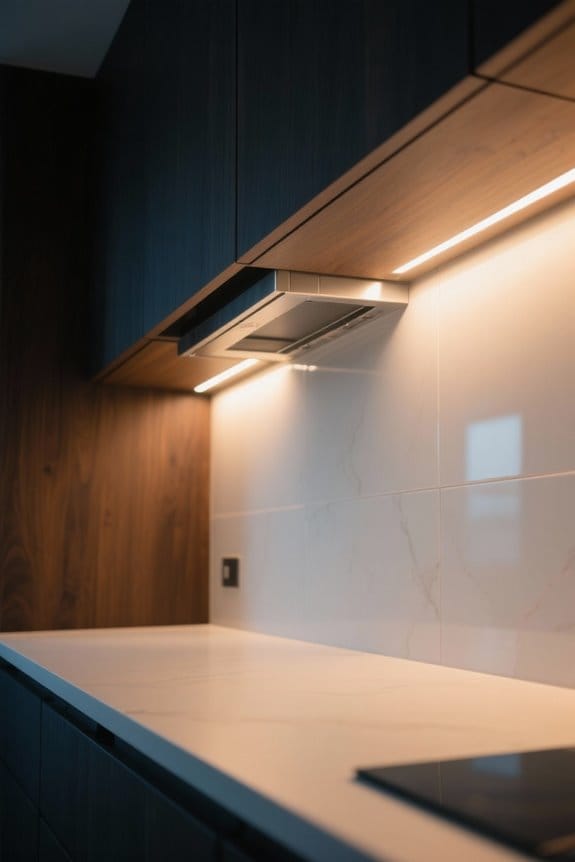


To beat glare from polished stone and stainless steel in kitchens, consider strategic design choices. Incorporating matte finishes reduces reflections, while varied materials create visual interest. Use effective lighting placements like under-cabinet LEDs to minimize distractions and enhance functionality. Adjustable window treatments, such as sheer curtains or blinds, provide control over natural light. By harmonizing color palettes with textures, one can create a cohesive and inviting kitchen. Discover more techniques to further optimize kitchen design.
Key Takeaways
- Utilize matte finishes on walls and surfaces to minimize glare from polished stone and stainless steel in the kitchen.
- Position under-cabinet LED lighting strategically to provide ample task illumination while reducing reflections and glare.
- Incorporate textures, like patterned backsplashes, to break up light reflections and enhance the overall aesthetics of the kitchen.
- Select window treatments, such as adjustable blinds or sheer curtains, to control natural light entry and reduce glare during cooking.
- Balance reflective surfaces with appropriate lighting angles to avoid harsh glare while enhancing brightness in the kitchen space.
Understanding Glare and Its Impact on Kitchen Design
Glare in kitchen environments can greatly influence both functionality and aesthetics, making awareness of its effects essential for effective design. Primarily caused by reflective surfaces like polished stone and stainless steel, glare can interfere with visibility and cooking comfort. The finish of these surfaces, whether glossy or matte, plays a critical role; glossy finishes may enhance reflections but often create distractions due to excessive shine. To reduce glare, strategic lighting placement is crucial, such as positioning LED under-cabinet lights towards the back. Additionally, selecting LED bulbs with built-in diffusers can soften harsh lighting. Smart bulbs offer millions of color options for customized ambiance, which can be adjusted to create a softer, more visually comfortable environment. Finally, incorporating textures and varied materials, like matte finishes or patterned tiles, can help break up reflections, fostering a glare-reduced, visually appealing kitchen environment.
Utilizing Reflective Surfaces to Enhance Light

Reflective surfaces can play a pivotal role in enhancing light within kitchen spaces, transforming them into brighter and more inviting areas. Incorporating polished stone and stainless steel, for example, allows light to bounce effectively throughout the room. High-gloss surfaces are on-trend but may require careful lighting angles or diffusers to prevent glare, ensuring ideal illumination. Mirrors and other reflective surfaces are excellent choices for visually expanding small kitchens, creating the illusion of more space. Glass tiles or antique mirrors as backsplashes not only conceal cooking splatters but also enhance the kitchen’s aesthetic appeal. When strategically placed, reflective surfaces can redirect natural light, illuminating darker areas and reducing the reliance on artificial lighting, which is essential for achieving both beauty and functionality. For optimal lighting in moisture-prone areas like kitchens, consider installing waterproof recessed lights that offer customizable color temperatures and moisture resistance, ideal for maintaining both style and safety.
The Importance of Lighting Placement

Effective lighting placement is essential for creating a kitchen environment that is both functional and visually appealing. In kitchens featuring polished stone surfaces, minimizing glare and reflections is vital. Under-cabinet kitchen lighting should be installed towards the back of the surface, thereby reducing direct glare while providing adequate task lighting. For peak visibility during countertop activities, positioning these lights in the middle can help avoid harsh shadows from overhead sources. Additionally, using LED lights with built-in diffusers promotes a softer ambient glow, enhancing the overall kitchen design. Users emphasize the significance of strategic light placement, balancing aesthetics and functionality, ensuring that the kitchen space feels welcoming and efficient for all cooking endeavors. LED lights are a popular choice due to their energy efficiency, long lifespan, and ability to produce less heat, contributing to a safer kitchen environment.
Choosing the Right Materials for Balance
Selecting the right materials is essential for achieving balance in kitchen design, as each surface influences both aesthetics and functionality. Natural stone, such as polished Taj Mahal, serves as a stunning backsplash but can create unwanted glare. To counteract this, incorporating textured or matte-finish surfaces alongside polished materials helps to balance light reflection. Stainless steel complements these choices beautifully, offering durability and a modern touch. Additionally, strategic placement of LED under cabinet lighting can further reduce glare on glossy surfaces while ensuring even illumination. Designers should avoid direct overhead lighting to enhance both usability and visual appeal. Carefully considering these elements allows homeowners to create a harmonious kitchen environment that resonates with practicality and style. Modern styles that blend seamlessly with existing home decor can also contribute to the overall aesthetic appeal of a well-balanced kitchen.
Strategies for Effective Window Treatments
Windows play a pivotal role in kitchen design, serving as a source of natural light while also introducing challenges such as glare and shadows. To enhance comfort, effective window treatments are essential. Blinds and shades, adjustable for precise sunlight control, allow homeowners to balance natural light and glare reduction. Sheer curtains are another option, softly diffusing light while providing a decorative touch, maintaining elegance without excessive brightness. Layered window treatments, which combine various fabrics and designs, offer increased functionality and flexibility in light management. Properly chosen treatments can markedly improve visibility during peak cooking times, turning windows into assets rather than obstacles. In this way, strategic window treatments contribute to a more inviting and practical kitchen environment. Additionally, integrating smart home compatibility can enhance the adaptability of window treatments, allowing for automated adjustments based on the time of day or weather conditions.
Incorporating LED Lighting for Functionality
How can the strategic use of LED lighting transform a kitchen space? Thoughtful incorporation of LED lighting considerably enhances functionality, particularly in kitchens with reflective surfaces like polished stone. Under-cabinet lighting, when installed on or behind kitchen cabinets, improves work visibility and decreases glare, creating a more pleasant cooking environment. By selecting LED fixtures with built-in diffusers, homeowners can soften harsh light, achieving a balanced ambiance suitable for various tasks. Customizing the placement of these lights based on the gloss level of surfaces guarantees peak usability and aesthetics. Experiences show that proper LED integration not only enhances the practicality of kitchen spaces but also elevates their overall atmosphere, making it a vital consideration for any modern kitchen design. To further improve energy efficiency in the kitchen, consider using warm white color temperatures which create a cozy atmosphere and reduce electricity consumption.
Focusing on Ambient vs. Task Lighting
Effective kitchen lighting hinges on the harmonious balance between ambient and task lighting, both of which serve distinct yet complementary purposes. Ambient lighting creates a soft, even glow throughout the kitchen, enhancing visibility while reducing harsh shadows and glare from polished stone and steel surfaces. In contrast, task lighting focuses specifically on areas where kitchen activities occur, such as under-cabinet lights illuminating work surfaces without adding glare. For ideal functionality, a combination of dimmable ambient lights and bright task lighting allows for versatile control over brightness. Utilizing built-in diffusers in LED lighting minimizes harsh effects, and careful bulb choice and placement, avoiding direct overhead lights, further enhance usability, creating a visually appealing environment tailored to various culinary needs. Incorporating under cabinet dimmable LED lights can provide precise control over illumination levels, ensuring that the kitchen space is both functional and aesthetically pleasing.
Creating a Cohesive Design With Texture and Color
While designing a kitchen, the interplay of texture and color plays a pivotal role in achieving a cohesive and inviting space. Integrating various textures, like polished stone and matte finishes, can establish visual interest while minimizing glare. This attention to textures enhances the overall aesthetics. A carefully curated color palette, blending warm and cool tones, creates harmony among the textured surfaces, eliminating stark contrasts that contribute to visual clutter. Additionally, materials like glass or stainless steel can reflect light effectively, preventing harsh glare. Decorative elements, such as unique hardware or patterned backsplashes, offer depth and dimension, seamlessly aligning with the kitchen’s theme. Thoughtful choices in high-quality textures and lighting elevate both style and functionality in daily activities. Dimmable features enable adjustable brightness for comfort, allowing for the perfect lighting ambiance in any situation.
Frequently Asked Questions
How Can I Clean Mirrored Surfaces in the Kitchen?
To clean mirrored surfaces in the kitchen, one can employ various cleaning techniques such as using a mixture of water and vinegar, microfiber cloths, or commercial glass cleaners to guarantee a streak-free shine.
Are There Any Drawbacks to Using Mirrors in Kitchen Design?
Reflective surfaces in kitchen design can symbolize elegance but may cause difficulty in maintenance and cleanliness. Additionally, the potential for glare and distorted reflections could diminish aesthetic appeal, creating a sense of discomfort for users.
Can Mirrored Finishes Be Applied to Cabinet Hardware?
Mirrored finishes can indeed be applied to cabinet hardware. This approach enhances the aesthetic of various hardware styles, creating a contemporary look while also reflecting light, ultimately influencing the overall kitchen design ambiance.
Will Using Mirrors Increase the Risk of Accidents in the Kitchen?
Mirrors glinting like shards of sunlight can indeed heighten safety concerns in a kitchen, as reflections confound spatial awareness. Careful placement and use of mirrored surfaces might mitigate risks, ensuring a balance between aesthetics and functionality.
What Types of Mirrors Are Best for Kitchen Backsplashes?
Glass and acrylic mirrors are ideal for kitchen backsplashes. These mirror types offer durability and reflective properties while enhancing the aesthetic. Choose tempered glass for safety and easy cleaning, ensuring a stylish and functional kitchen environment.