
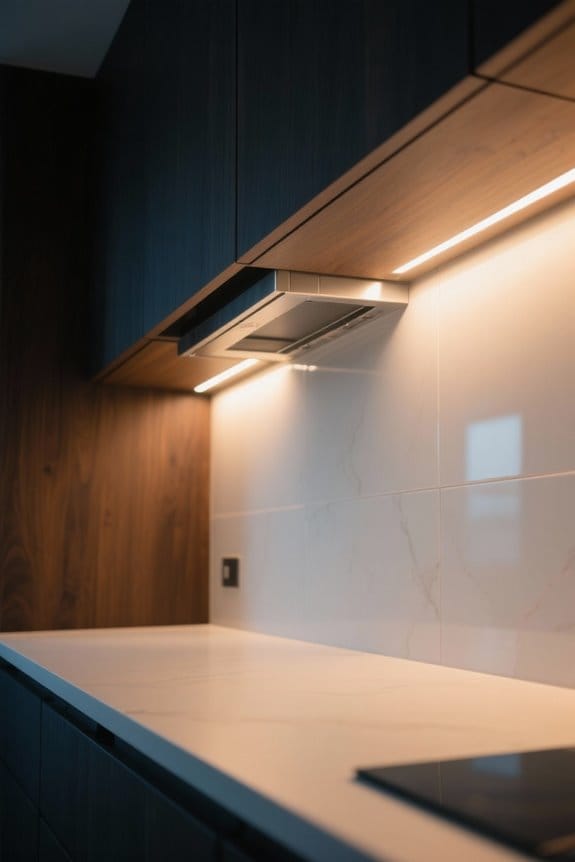

Night lighting hygiene is essential for ensuring safe navigation at night without disrupting sleep. Soft, warm-toned lights, such as amber or red night lights, guide individuals through dark spaces while supporting melatonin production. Motion-sensor lights are a must-have for energy efficiency and convenience, allowing illumination only when needed. Creating a serene environment with dimmable options enhances winding down. By managing light quality and strategically placing fixtures, individuals can foster better sleep. More insights await regarding the ideal choices to enhance nighttime routines.
Key Takeaways
- Use warm-toned night lights (2700K to 3000K) to minimize disruptions while navigating at night without affecting sleep quality.
- Motion-sensor lights provide guidance without the need to manually turn on lights, preserving melatonin production.
- Limit exposure to blue light one hour before bedtime to enhance melatonin production and improve sleep hygiene.
- Strategically place dimmable lights in hallways and near stairs for safe navigation while maintaining a calming atmosphere.
- Establish a calming night routine with low-light sources to signal relaxation and prepare the body for restful sleep.
Understanding Night Lighting Hygiene
Night lighting hygiene is an essential aspect of creating an environment conducive to restful sleep. By effectively managing light exposure at night, individuals can support their natural sleep-wake cycle and enhance the quality of their sleep. Utilizing ambient lighting with softer hues, especially in the red spectrum, promotes relaxation and signals the body to prepare for sleep. It is essential to minimize exposure to bright lights and electronic screens before bedtime, as they can inhibit melatonin production, hindering sleep onset. Dimming lights in the evening, along with turning off devices at least one hour prior to sleep, allows for a peaceful shift to rest. Adjustable swing arms in plug-in swing arm lamps provide versatile positioning that can help in setting the perfect lighting needed for relaxation. These practices are critical for nurturing effective sleep hygiene and ensuring uninterrupted, restorative slumber.
The Impact of Light on Sleep Quality

Understanding the impact of light on sleep quality is vital, as both natural and artificial light play important roles in regulating sleep patterns. Daily light exposure is necessary for maintaining a healthy circadian rhythm, as bright natural light promotes wakefulness and signals when to sleep. Research highlights that excessive nighttime light exposure, particularly blue light from screens, can inhibit melatonin production, leading to poorer sleep quality. Alarmingly, nearly half of Americans report inadequate morning light exposure, diminishing their alertness and sleep health. To improve sleep hygiene, individuals should aim for at least one hour outdoors each day and limit blue light exposure one hour before bedtime. These practices can greatly enhance overall sleep quality and guarantee a more restful night. Furthermore, utilizing energy-efficient technology in smart lighting can also contribute to better sleep by reducing unnecessary light pollution and maintaining optimal light levels for relaxation.
Types of Night Lighting Solutions

Lighting solutions designed for nighttime use have gained popularity as individuals seek to improve their sleep quality and overall well-being. Various options cater to this need, starting with the soft hue of the Casper Glow Light, which aids in sleep onset. The Sleep Aid Red Night Light features low-light settings, minimizing disruptions during bathroom trips to preserve sleep quality. In addition, the Verilux HappyLight mimics natural light, enhancing nighttime sleep patterns for those lacking daytime exposure. Combining sounds and light, the KeySmart CleanLight Snooze Sound Machine creates a calming environment for healthy sleep. Moreover, mood lighting like salt lamps and stylish nightlights fosters a relaxing ambiance, essential for individuals prone to waking in the night as they maintain their bedding routine. A consideration when selecting these solutions is the energy efficiency features that can significantly reduce electricity consumption while ensuring optimal performance.
Warm vs. Cool Light: Which Is Better?
Which type of light is best for promoting a peaceful night’s rest? Warm light, characterized by a color temperature of 2700K to 3000K, is highly recommended. It encourages relaxation and boosts melatonin production, essential for a healthy bedtime routine. In contrast, cool light, with a temperature of 5000K to 6500K, mimics daylight, increasing alertness but disrupting the body’s natural wind-down process. Exposure to cool light in the evening can suppress melatonin levels, delaying sleep onset and negatively affecting overall sleep quality. The National Sleep Foundation advises utilizing warm light in bedrooms to enhance the circadian rhythm, fostering better sleep cycles. For ideal relaxation, individuals should create environments with soft, warm lighting as part of their evening preparation. Additionally, selectable color temperatures allow users to customize lighting scenarios according to their needs, optimizing ambiance and comfort throughout different parts of the day.
Benefits of Motion-Sensor Lights
As homeowners seek to enhance their nighttime environments, the use of motion-sensor lights has surged in popularity due to their practical benefits. These lights offer energy-efficient illumination, activating only when needed, which not only saves on electricity bills but also prevents disturbing the sleep of others. By customizing sensitivity levels and duration, users can create a calm nighttime environment tailored to their specific needs. Additionally, motion-sensor lights enhance security by brightening pathways and entryways automatically when movement is detected, deterring potential intruders. Studies indicate that incorporating such lighting solutions effectively contributes to improving sleep hygiene, supporting the overall well-being of household members while ensuring safety and convenience. Investing in motion-sensor lights is essential for any modern home. Motion sensor night lights often come with energy-efficient designs, making them a sustainable choice for environmentally-conscious homeowners.
Strategies for Optimal Light Placement
When considering the placement of night lights, homeowners should prioritize strategic locations to maximize both functionality and comfort. Position night lights near the floor, where they can illuminate pathways without casting bright light that disrupts melatonin production. Utilizing red or amber bulbs is advisable, as these wavelengths minimize interference with the body’s internal sleep-wake cycle. Additionally, dimmable night lights allow users to adjust brightness based on the time of night, providing softer light after hours. Strategic placements in common areas, like hallways and bathrooms, reduce reliance on overhead lighting that could disturb restful periods. Incorporating motion-sensor night lights offers intermittent illumination, enhancing convenience while preventing full awakenings that could disrupt the night’s serenity.
Creating a Sleep-Friendly Atmosphere
Creating a soothing sleep-friendly atmosphere requires thoughtful consideration of lighting and environmental factors to foster a calm and restorative setting. Opt for ambient lighting that promotes relaxation, while minimizing harsh or bright lights that can disrupt a peaceful mood. Dimming lights in the hour before bed aids melatonin production, facilitating a smooth shift to sleep. Choose red or warm-toned night lighting, which can greatly enhance the sleep environment by reducing disturbances. Maintaining a cool bedroom temperature around 65°F further contributes to comfort and better quality sleep. Additionally, incorporating noise-dampening elements like rugs or sound machines can create a serene atmosphere, ensuring the body receives the necessary cues for much sleep and relaxation. For a truly immersive experience, consider using smart lighting options that enable voice control and automation, allowing you to tailor the ambiance to support better sleep.
Avoiding Blue Light Exposure Before Bed
How can individuals effectively protect their sleep by minimizing blue light exposure before bed? The influence of blue light emitted from screens and LED lighting can greatly impede quality sleep. Research recommends limiting exposure at night, ideally one hour before bed, to aid melatonin production and support natural sleep onset. To enhance this nightly routine, individuals can employ blue light filters on devices or shift to warmer light settings. Incorporating dim red lighting or reading can further promote relaxation, creating a conducive atmosphere for rest. By consciously managing blue light exposure, individuals can foster longer sleep duration and significantly improve sleep quality, ensuring that their nightly routines support restorative rest and overall well-being. Opting for fixtures like bell jar pendant lights, which often feature adjustable bulb types, can help in creating an ambiance that minimizes blue light exposure, thus fostering better sleep hygiene.
Establishing a Relaxing Night Routine
Establishing a relaxing night routine is essential for anyone seeking quality sleep and overall well-being. Dedicating 30-60 minutes before bed for calming activities, like reading or gentle stretching, signals the mind to wind down. Limiting exposure to electronic devices during this time helps prevent blue light from hindering melatonin production. To further enhance the pre-sleep routine, dimming lights in the home can create a serene environment. Incorporating relaxation techniques, such as the 4-7-8 breathing method, assists in calming a racing mind, making it easier to shift into sleep. Additionally, taking a warm bath can provide a comforting ritual; the subsequent drop in body temperature signals the body that it’s time to rest in a tranquil manner. To further improve night lighting, consider installing energy-efficient LED options that can be dimmed to create a soothing atmosphere without compromising on energy savings.
Practical Tips for Safe Navigation at Night
Steering safely at night requires thoughtful consideration of lighting solutions to enhance visibility while promoting restful sleep. Utilizing dimmable nightlights or soft-glow lights can minimize sleep disruption, particularly red light, which preserves melatonin production. Position nightlights strategically in hallways and near stairs, maintaining a low light intensity to avoid glare and anxiety during nighttime navigation. Additionally, investing in motion-sensor lights that illuminate only upon movement detection offers a hands-free, energy-efficient solution to enhance safety. Maintaining a clutter-free environment is essential; clear pathways reduce hazards and allow any light sources to effectively aid navigation without distractions. These practical tips create a well-lit yet restful atmosphere, ensuring safe movement without compromising sleep quality. Many lamps offer adjustable brightness and color temperature, allowing for ideal ambience creation in various settings.
How to Choose the Right Night Lights
When selecting the ideal night lights, one must consider several critical factors to guarantee effective illumination without disrupting sleep patterns. First, opt for night lights that emit a warm color spectrum, such as red or amber, which are less likely to interfere with melatonin production. Additionally, pay attention to brightness levels; models with adjustable dim settings can provide a soft glow during nighttime activities without waking anyone. Low-wattage LED bulbs are a smart choice as they are energy-efficient and long-lasting. Moreover, placement is essential; position night lights strategically to guide safe navigation while minimizing glare or direct light exposure. Implementing these suggestions can create a harmonious balance between visibility and restful sleep. Consider utilizing motion sensor lights equipped with light sensors to automatically deactivate during daylight for energy savings.
Enhancing Sleep With Strategic Light Management
How can strategic light management transform the quality of sleep? By utilizing dim, warm-toned lighting in the evening, individuals can stimulate melatonin production, signaling the body to prepare for rest. This practice, combined with light-blocking curtains or sleep masks, reduces disruptions from external sources, creating a darker environment that fosters a good night’s sleep. During the day, exposing oneself to bright, natural light for at least one hour assists in regulating the circadian rhythm, enhancing overall sleep health. Additionally, implementing low-light sources, such as red night lights, allows for necessary illumination without hindering sleep. Importantly, reducing blue light exposure from screens one hour before bedtime can lead to better sleep onset and improved quality throughout the night.
Frequently Asked Questions
What Is the 10 3 2 1 Rule for Sleep?
The 10 3 2 1 rule for sleep emphasizes enhancing the sleep environment through proper light exposure, establishing a calming bedtime routine, and utilizing relaxation techniques, ultimately promoting significant sleep benefits and overall better rest quality.
Can Sleep Hygiene Help With Insomnia?
Sleep hygiene serves as a beacon, guiding those with insomnia toward improved rest. By optimizing the sleep environment, practicing relaxation techniques, establishing bedtime routines, managing dietary influences, and reducing stress, significant relief can ensue.
What Is the 123 Sleep Rule?
The 123 Sleep Rule encourages individuals to create an ideal sleep environment by regulating light exposure, maintaining a comfortable bedroom temperature, and establishing a consistent bedtime routine with relaxation techniques, enhancing overall sleep quality.
What Disrupts the Sleep-Wake Cycle?
The sleep-wake cycle is disrupted by excessive light exposure from electronic devices, hormonal imbalances, and various environmental factors. These elements interfere with the circadian rhythm, making it difficult for individuals to maintain healthy sleep patterns.


