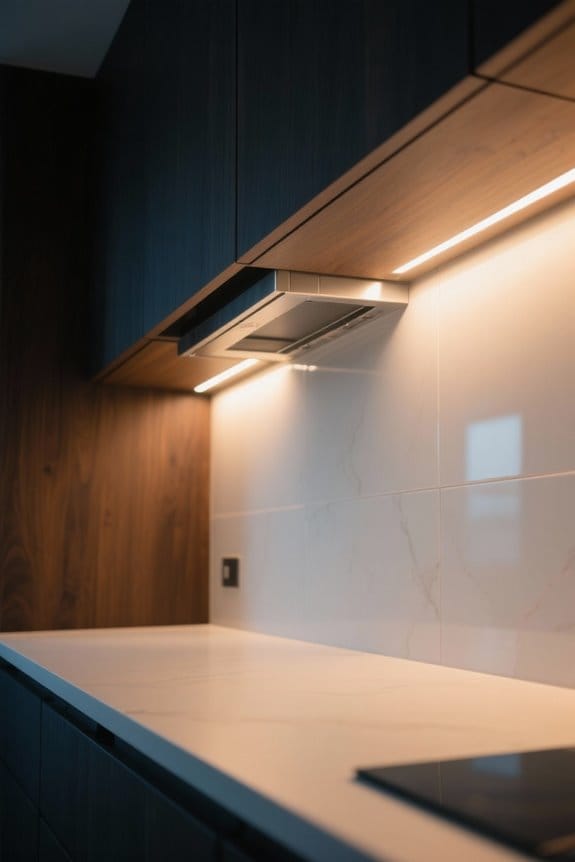


Effective closet lighting layouts prioritize shadow-free access and color accuracy to enhance visibility. Utilize a combination of ambient, task, and accent lighting for thorough illumination. Consider using recessed fixtures for small closets and track lighting for larger spaces. LED options are ideal for color precision and energy efficiency. Regular assessments can identify shadow-heavy zones, improving overall organization. Ideal lighting guarantees effortless outfit selection, making well-lit closets a must-have. Explore more strategies for transforming your closet into a perfectly lit space.
Key Takeaways
- Utilize multiple light sources to achieve shadow-free access, ensuring even illumination throughout the closet space.
- Conduct a shadow test and use a light meter to identify and eliminate dark spots effectively.
- Incorporate recessed or flush-mounted LED fixtures to maintain a clean look while enhancing color accuracy in clothing.
- Add adjustable track or accent lighting to highlight specific areas and improve visibility of important items.
- Implement motion sensor under-cabinet lights for automated, energy-efficient access that enhances overall closet functionality.
Understanding the Importance of Closet Lighting
Effective lighting is essential for creating functional and aesthetically pleasing closet spaces. Proper illumination enhances color perception, allowing for accurate clothing selection by eliminating shadows that can distort hues. Strategic lighting optimizes closet functionality, making it easier to locate items quickly and efficiently, especially during busy mornings. A well-lit closet not only increases usability but also elevates visual appeal, transforming a mundane area into an inviting showcase. Insufficient lighting can contribute to a cramped and disorganized feel, whereas thoughtful placement of fixtures creates shadow-free access, making organization more effective. Simple adjustments, such as using LED lights or sconces, can greatly improve the experience of using a closet, leading to a more streamlined and enjoyable daily routine. Motion sensor capabilities allow for hands-free operation, further enhancing convenience and efficiency in everyday use.
Essential Layers of Closet Lighting

Creating a well-illuminated closet involves more than simply adding a single light source. A properly designed closet lighting system incorporates three important layers: ambient, task, and accent lighting. Ambient lighting, producing 10-20 foot-candles of overall illumination, can be achieved using recessed or flush-mounted LED lights. Task lighting is essential for focused areas, such as dressing mirrors, providing 20-50 foot-candles that meet specific needs. Accent lighting enhances the closet’s visual appeal, highlighting architectural features or displayed items. For accurate color rendering, it is important to use a color temperature between 3000K and 4000K, ensuring clean white light that maintains fabric colors. This layered lighting approach guarantees effective illumination while fostering color accuracy in the closet environment. To achieve energy savings and efficient usage, consider using smart bulbs with scheduling and customization features that align with your lighting needs.
Recommended Products

SPACIOUS SIZE: Measuring 47 inches in diameter and 51 inches in height, this oversized fixture is nice for high ceilings and expansive open areas. Its impressive scale creates a dramatic and inviting atmosphere, elevating your home’s interior style effortlessly

BUILD HANDY ROOM DIVIDERS: EverBlock modular building blocks are perfect for adding privacy or purpose to any space! They’re great for offices, classrooms, or shared living areas.

BUILD HANDY ROOM DIVIDERS: EverBlock modular building blocks are perfect for adding privacy or purpose to any space! They’re great for offices, classrooms, or shared living areas.
Assessing Your Closet Size and Layout

When evaluating a closet’s size and layout, it is essential to take into account the space’s dimensions, as these directly influence the lighting design. Small reach-in closets generally require only one ceiling fixture, while larger walk-in closets may benefit from multiple light sources. To effectively assess the lighting layout, conduct a shadow test with a flashlight; this will help identify any dark spots that need additional illumination. Utilize a light meter to measure illumination levels, targeting 10-20 foot-candles for ambient lighting and 20-50 foot-candles for task lighting. Additionally, consider the arrangement of shelves and storage items when planning the lighting setup to guarantee proper lighting distribution and eliminate shadows, enhancing the overall visual appeal of your closet space. Incorporating under cabinet lights with adjustable brightness can further enhance the functionality and aesthetic appeal by allowing customized lighting tailored to specific tasks or preferences.
Identifying Dark Spots and Problem Areas
Identifying dark spots and problem areas in a closet is essential for achieving ideal lighting conditions that enhance both functionality and aesthetic appeal. To do so, one should conduct a shadow test by using a flashlight to observe how lighting interacts with the space. This helps in identifying areas that remain poorly illuminated. A light meter can further assist in measuring illumination in foot-candles, ensuring adequate lighting levels. The closet layout plays a significant role, as items like shelves and clothing can obstruct visibility and create shadows. Addressing dark spots above hanging clothes may involve installing backlighting, which enhances clarity and garment distinguishability. Regular assessments are critical, especially following wardrobe changes, to determine necessary lighting adjustments for peak performance. Consider installing smart lighting solutions that offer over 16 million colors and dimming options to customize the lighting experiences in your closet, ensuring both shadow-free access and color accuracy.
Recommended Products
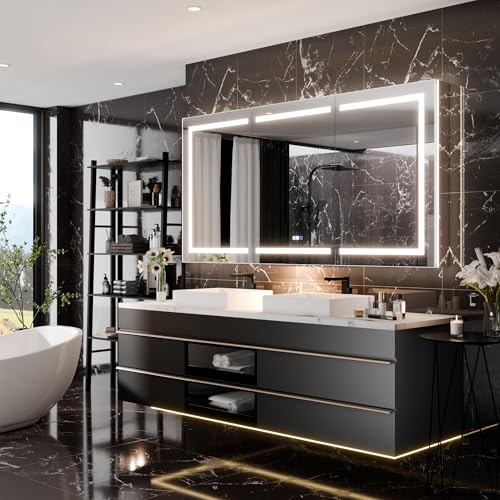
Dual LED Lighting & 5x Magnifying Mirror: Features front and back dual LED lighting for enhanced visibility during tasks like makeup application and shaving, complemented by a movable 5x magnifying mirror for detailed inspection.

【🦼eAhora’s Masterpiece – Ultralight Carbon Fiber Electric Wheelchair】Redefining premium mobility with precision engineering and human-centered design. 💝 At eAhora, we focus not only on performance, but on what truly matters—safety, comfort, and everyday usability. ♥️ By combining advanced materials with thoughtful assistive technology, we created an electric wheelchair that delivers confidence, freedom, and peace of mind for both users and caregivers.
Contains: 10.5kW Quickstart Acu-Steam Bath Generator, Touch Pad Control Panel, Steamhead, Pressure Relief Valve, and Built in Auto Drain
Selecting the Right Color Temperature for Clarity
How essential is the selection of color temperature in achieving clarity and functionality within a closet? Selecting the right color temperature between 3000K and 4000K is fundamental for maximum brightness and accurate color perception. LED lights within this range yield a clean white light, enhancing wardrobe assessment by ensuring vibrant colors and true-to-life fabric appearances. It’s also critical to prioritize a Color Rendering Index (CRI) value above 90, which guarantees color fidelity. Choosing lighting systems that maintain consistency across fixtures avoids visual confusion, creating a harmonious atmosphere. While cozy temperatures (2700K-3000K) may offer ambiance, they can distort colors, undermining the goal of achieving shadow-free and accurate identification of clothing. Therefore, precise color temperature is a must-have for effective closet lighting. Additionally, selecting LED options that save up to 90% energy compared to incandescent bulbs can be both cost-effective and environmentally friendly.
Recommended Products

50W 5500lm Hight Brightness - 1x4 LED Flat Panel Light Surface Mount: AIKVSXER Super Bright 1x4 Surface Mount LED Ceiling Light is designed with high-efficiency LED chips to replace traditional fluorescent light, high-efficiency (efficacy over 110LM/W) light source, reducing carbon emissions and your electric bill by 85%.

High Brightness & Energy Efficiency: This 50W 1x4 led flat panel light offers 5500LM of brightness, ensuring excellent visibility while consuming significantly less energy than traditional fluorescent lights. It reduces carbon emissions and electricity costs by 85%.

Customizable Color Temperatures: Tailor your lighting atmosphere with 3000K Warm White, 4000K Natural White, and 5000K Daylight. Adjust the setting via a sliding button before installing this 2' x 2' led light to the ceiling
Recommended Lighting Fixtures for Closet Spaces
Effective lighting is essential for revealing the full potential of a closet space, following the careful selection of color temperature for clarity. Recessed lighting provides an excellent solution for small or low-ceiling closets, ensuring shadow elimination and even light distribution. For versatility, track lighting offers adjustable options, allowing users to direct light towards specific areas like shelves or hanging clothes. LED strip lights serve as effective accents, illuminating shelves and rods to enhance color accuracy. Flush-mounted fixtures are practical for tighter spaces, delivering direct lighting while maintaining a streamlined aesthetic. A combination of ambient, task, and accent lighting creates ideal visibility and enriches the closet’s ambiance. Consider integrating smart controls for easy management and customization of the lighting experience. Most recessed lights consume significantly less power than standard bulbs, offering energy savings and sustainability.
Recommended Products
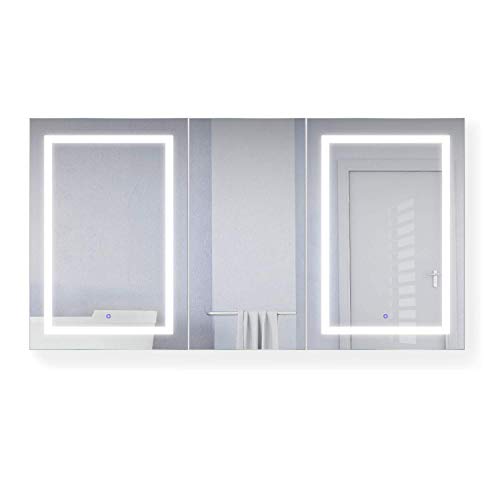

💡【Edge-Lit Innovation Full Mirror Premium Glow】Unlike central-strip designs that reduce usable mirror area, our outer-edge sandblasted frosted LED strip maximizes mirror space for clear, unobstructed grooming. More decorative than lamp-shaded styles, it maintains elegant aesthetics when lit or off. To address the common dimness issue in sandblasted strips, we widened it to 1 inch—delivering both premium aesthetics and bright, cozy bathroom lighting in one.

✅LED BACKLIT MIRROR WITH CABINET: The mirror features a cabinet with glass panels having a left hinge. The back of the mirror (door) features a 3X magnifying lighted mirror.
Enhancing Functionality With Efficient Lighting Solutions
A well-thought-out lighting strategy can markedly transform a closet into a functional and inviting space. Utilizing layers of lighting, such as ambient lighting and task lighting, enhances visibility and facilitates shadow elimination. Strategic placement of LED strip lighting along shelves and rods offers focused illumination, allowing individuals to easily access stored items while maintaining color accuracy in clothing selection. Installing motion sensors provides automatic activation of lights upon entry, removing the need to fumble for switches. When designing the closet, aim for brightness levels of 75-100 lumens per square foot and a color temperature of 3000K-4000K to guarantee that fabrics appear true to their actual colors. Consider using motion sensor under cabinet lights with adjustable brightness and color temperatures for customizable lighting solutions. Together, these efficient lighting solutions appreciably improve closet functionality.
Recommended Products

LV MT CEILING OCC SNSR, 1000SQFT, WHITE

【Smart Motion Sensor - Lights Your Path Automatically】: Equipped with an advanced motion and light sensor, ModoLight automatically turns on when you approach within 3 meters. Enjoy hands-free, reliable illumination for hallways, stairs, closets, and nighttime navigation.

【10 LEDs Motion Sensor Light】Our Under cabinet lighting adopts a traditional design of 10 LEDs per light, with a brightness of 95 lumens, gentle and not dazzling. Brightness adjustable design are our upgraded features. With a 250mAh rechargeable battery and motion sensing and night sensing functions, it is energy-saving and environmentally friendly. It is the perfect choice for your home lighting.
Frequently Asked Questions
Is 4000K or 5000K Better for Closets?
For closets, 4000K lighting is generally preferred over 5000K, considering LED brightness comparison and color temperature effects. This choice enhances color accuracy, promotes better organization, and aligns with cost efficiency and lighting efficiency metrics in closet design considerations.
What Is the Code for Light Fixtures in Closets?
Like the guiding stars in a well-lit night sky, light fixture codes in closets guarantee safety. Comply with installation guidelines, using energy-efficient LED types, motion sensors, dimmer switches, and considering bulb lifespan and color temperature for ideal illumination.
What Order to Color Code a Closet?
To color code a closet effectively, apply color coding tips by arranging items from light to dark shades while utilizing energy-efficient light bulb types that enhance closet aesthetics, adhering to lighting design principles for ideal visual merchandising techniques.
Where Should Lights Be Placed in Closets?
In closets, strategic light placement enhances clarity. Larger spaces thrive with ambient fixtures, while intensity varies with dimming options. Incorporate natural light, mirrors, energy-efficient designs, and motion sensors, ensuring installation height maximizes visibility and functionality.