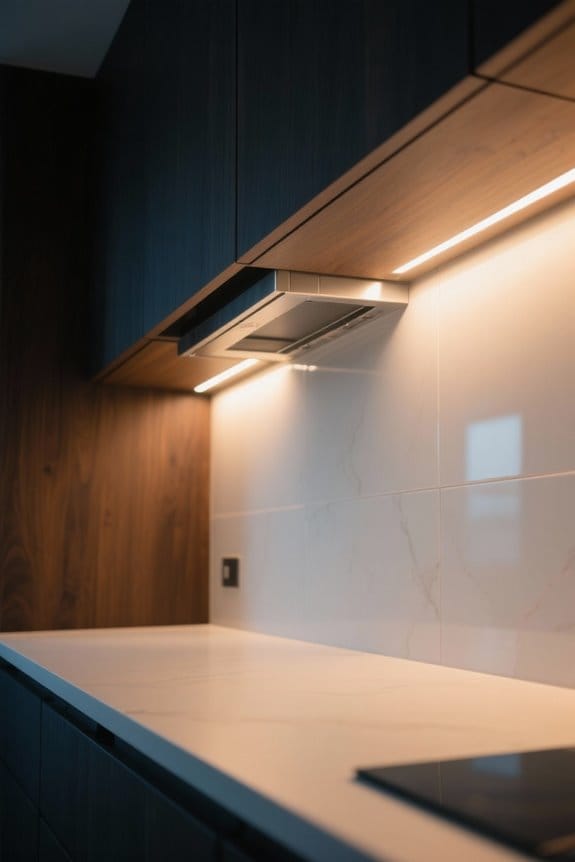


Effective island lighting hinges on meticulous calculations of centerlines, spacing, and sightlines. Start by centering your fixtures, ensuring a minimum 6-inch distance from the island edges. For best spacing, maintain 24 to 36 inches between pendants. Ideal heights range from 30 to 36 inches above the countertop, with adjustments for tall ceilings. Selecting the right pendant size enhances functionality and style. Discover how to further refine your kitchen lighting design for maximum impact and aesthetic appeal.
Key Takeaways
- Measure the island width to determine the centerline for symmetrical pendant lighting placement.
- Maintain at least 6 inches from the centerline to the island edges for proper spacing.
- For two pendants, position them 15 inches from the centerline and space them 30 inches apart.
- Hang pendants 30 to 36 inches above the countertop to ensure optimal task lighting and sightlines.
- Follow the “2× diameter” rule for spacing pendants; if 12 inches wide, space them 24 inches apart.
Understanding Centerlines for Pendant Placement
Understanding the concept of centerlines is fundamental for achieving effective pendant placement over a kitchen island. The centerline is determined by measuring the island’s width and locating the midpoint, which guarantees symmetrical lighting alignment. For multiple pendants, the centerline becomes important for addressing spacing and achieving even distribution. To maintain visual balance, the distance from the centerline to the island edge should be at least 6 inches. When positioning two pendants, an approximate 15-inch distance from the centerline is ideal. For three pendants, outer fixtures should maintain equal distances from both the centerline and the island’s end edges. Accurate measurement of the centerline is essential for harmonizing aesthetics and guaranteeing functional lighting above the kitchen island. Utilizing adjustable cord lengths in pendant lights allows for further customization in height, ensuring both functionality and design aesthetics are preserved.
Calculating Ideal Spacing Between Fixtures

Calculating the ideal spacing between pendant fixtures is a fundamental aspect of achieving balanced and visually appealing lighting above a kitchen island. The best spacing is generally 24 to 36 inches on center, with 30 inches being preferred for visual balance. Employing the “2× diameter” rule, measure the diameter of each pendant; for example, if a pendant has a diameter of 12 inches, space them 24 inches apart. For two pendants, specifically measure 15 inches from the center of the kitchen island to each pendant for an even look. When opting for three pendants, maintain about 30 inches of spacing between them, ensuring a 6-inch clearance from the island edges. Proper spacing fosters effective lighting distribution and reduces glare. Bell jar pendant lights, available in various design styles, can be incorporated into different kitchen aesthetics to complement the overall decor theme.
Determining Optimal Pendant Height Above the Counter

Selecting the right height for pendant lighting above the countertop is vital for both aesthetics and functionality in a kitchen. For ideal visibility, pendants should generally hang 30 to 36 inches above the standard counter height of approximately 36 inches. In homes with exceptionally tall ceilings, adjusting pendant height to 40 to 46 inches can enhance proportion and maintain design balance. It is important to measure from the countertop surface, not from the ceiling, to guarantee proper placement of hanging lights. The pendant diameter also plays a role in achieving effective task lighting; wider pendants may require slightly higher positioning. Understanding these guidelines guarantees that kitchen island lighting remains both beautiful and practical. For larger spaces, high bay LED lights with a minimum output of 30,000 lumens may be considered for optimal lighting.
Evaluating the Size of Pendant Lights for Your Island
Choosing the appropriate size of pendant lights for an island is essential in achieving both illumination and style in any kitchen space. For an 8-foot island, ideal diameter pendant lights are 20 inches for two fixtures, or 14 inches for three. To determine the number of pendants, subtract 12 inches from the island size, divide by the chosen light diameter, and divide that result by two. When considering spacing, pendants should be positioned 24 to 30 inches apart center-to-center to guarantee even distribution of light. Additionally, maintaining a clearance of 6 to 12 inches from the edge of the island enhances visual appeal while guaranteeing functionality. Pendant lights should hang 30 to 36 inches above the countertop for maximum task lighting. Smart color bulbs, like those from DAYBETTER and Govee, offer millions of color options, allowing for customizable ambiance in your kitchen lighting.
Tips for Achieving Balanced Sightlines in Your Kitchen
Achieving balanced sightlines in a kitchen is essential, particularly when incorporating pendant lights over an island. To create a cohesive visual anchor, align pendant lights with the island’s centerline. Maintain a hanging height of 30 to 36 inches above the countertop, ensuring they do not obstruct views while seated. For ideal light distribution and sightlines, apply the “2× diameter” rule: if the pendants are 12 inches wide, space them approximately 24 inches apart. Additionally, keep a distance of 6 to 12 inches from pendant edges to the island edges; this promotes an uncluttered appearance. Finally, test sightlines by observing from seated height, adjusting pendant placements or sizes as needed for maximum openness and balanced sightlines throughout the kitchen space. Consider using frosted or opal glass shades for your pendant lights, as they effectively diffuse light and reduce shadows, enhancing the ambiance of the kitchen.
Common Mistakes and How to Avoid Them
Commonly, homeowners make several critical errors when incorporating pendant lights over their kitchen islands, leading to a less-than-ideal aesthetic and functionality. One frequent mistake is neglecting to maintain a 6–12 inch clearance from each pendant to the island edge, resulting in overcrowding and visual imbalance. Additionally, ignoring the “2× diameter” rule for spacing can create hotspots and disrupt lighting distribution. Properly measuring and visualizing pendant spacing is imperative; utilizing placeholders can help in this regard. Maintaining a height of 30 to 36 inches above the island prevents glare and obstruction. Finally, selecting pendants that are proportionate in scale to the island and overall kitchen dimensions guarantees a cohesive and appealing look in your kitchen island pendant lighting arrangement. When choosing island lighting, consider the energy efficiency of the fixtures to ensure they blend functionality with sustainability.
Frequently Asked Questions
How Far Apart Should Island Lights Be Spaced?
Island lights should ideally be spaced 24 to 36 inches apart, considering various lighting styles and pendant designs. Proper spacing enhances ambiance settings and energy efficiency while complementing fixture heights and color choices for different island sizes.
What Is the Rule of Thumb for Island Lighting?
The rule of thumb for island lighting involves choosing appropriate fixture shapes, styles, and bulb types, considering pendant heights and color temperature, while adhering to current design trends that enhance kitchen aesthetics and promote energy efficiency.
How to Measure Island Lighting?
To measure island lighting, consider room dimensions and ceiling height. Guarantee ambient lighting and visual balance by coordinating fixture heights and spacing light fixtures appropriately. Adhere to electrical considerations and use installation tips for ideal results.
How Many Pendants Do I Need for a 72 Inch Island?
For a 72-inch island, three smaller pendant styles provide ambient lighting, balancing design themes and color temperature. Proper fixture placement guarantees ideal light heights and meets electrical requirements, harmonizing aesthetic balance with chosen bulb types and materials.