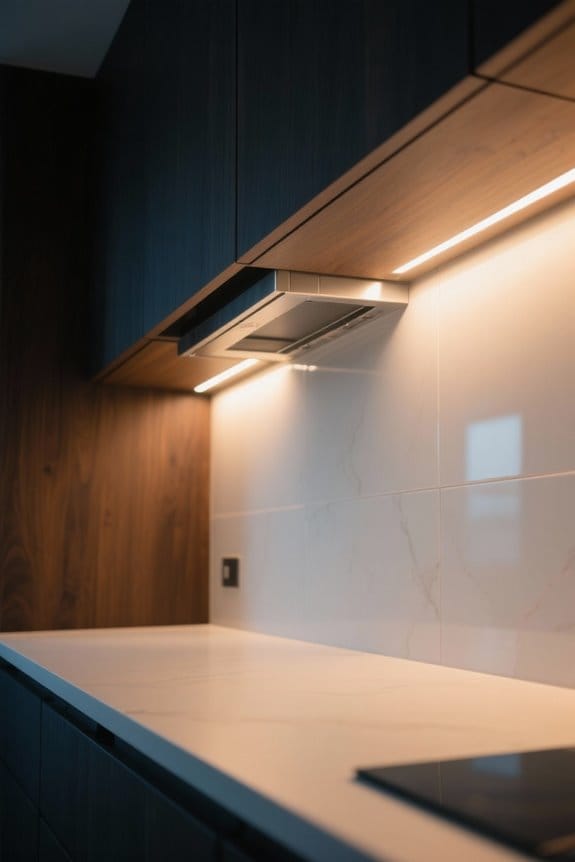


Effective light placement in small rooms enhances spatial perception and overall ambiance. Start by spreading light evenly using multiple sources like table lamps and wall sconces. Enhance corners to eliminate darkness, while pendant lights can emphasize height—particularly valuable in snug areas. Utilize mirrors to reflect light and create depth. Maximize natural light by choosing light-colored window treatments and keeping windows unobstructed. Additionally, opt for neutral lamp shades to foster an airy atmosphere. Discover more strategies for transforming your space.
Key Takeaways
- Use multiple light sources such as floor lamps and wall fixtures to spread light evenly throughout the room.
- Position mirrors opposite windows to reflect natural light and create an illusion of a larger space.
- Opt for light-colored or sheer window treatments to maximize natural light entry and maintain openness.
- Select neutral lamp shades and textures that diffuse light softly, enhancing brightness and spaciousness.
- Incorporate pendant lights at varying heights to draw the eye upward and create a sense of verticality.
Spread Light Evenly
To create an inviting atmosphere in small rooms, it is essential to spread light evenly across the space. Utilizing multiple light sources, such as floor lamps, table lamps, and wall-mounted fixtures, helps to balance illumination and prevent harsh shadows. By layering light—comprising ambient lighting, task lighting, and accent lighting—homeowners can enhance the functionality and visual appeal of small spaces. Ambient lighting provides overall brightness, while task lighting is ideal for specific activities like reading or cooking. Accent lighting adds depth and highlights cherished decor, creating an open feel throughout the room. Consulting guides on layering light can offer valuable insights on effectively distributing light, ultimately transforming small areas into inviting environments. Consider incorporating energy-efficient models to not only enhance ambiance but also reduce electricity bills over time.
Enhance Corners With Wall Sconces
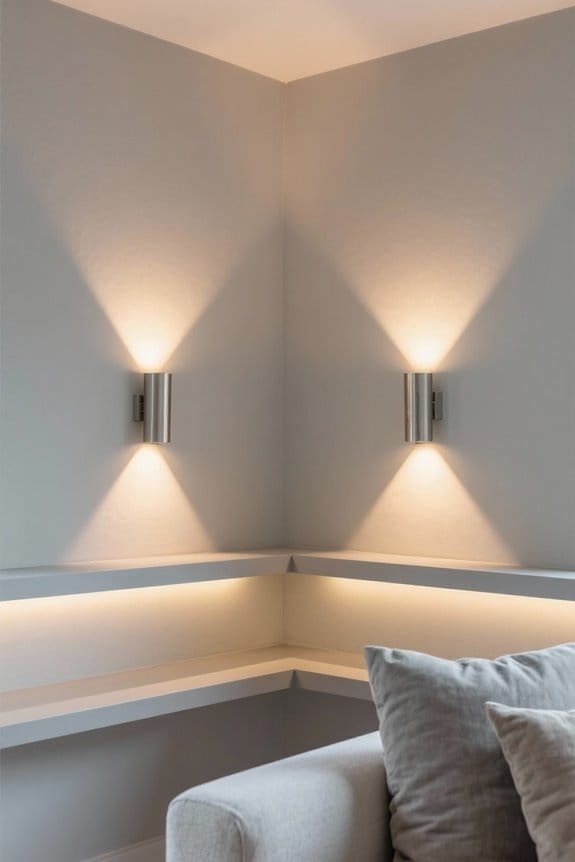
In many small rooms, corners can often feel dark and neglected, but wall sconces offer a compelling solution to enhance these overlooked spaces. By illuminating dark corners, wall sconces contribute to a balanced lighting scheme, providing needed ambient lighting. These fixtures, ideal for small rooms, improve the overall distribution of light, creating a more inviting atmosphere. Installing sconces beside a chimney breast not only brightens the area but also visually expands the room’s dimensions, promoting a spacious feel. Adjustable wall sconces offer directed light, allowing users to customize illumination for various moods or tasks. Their compact design guarantees that floor space remains unobstructed, making them a must-have for achieving a well-lit, functional environment in limited areas. Additionally, battery-operated sconces enhance installation flexibility, requiring no hardwiring and allowing placement in spaces without electrical outlets.
Emphasize Height With Pendant Lights

The use of pendant lights presents a stellar opportunity to enhance the verticality of small rooms, where ceiling height may feel limited. Long, slender pendant lights draw the eye upward, creating a visual illusion of increased height in compact areas. Employing fixtures at varying heights adds dimension and sophistication, contributing to an elegant atmosphere. Light and airy materials in the pendants help maintain an open feel, essential for making smaller spaces appear larger. Additionally, complementing vertical elements in the room with these lighting choices can further emphasize height, resulting in a dynamic visual experience. Many pendant lights offer adjustable cords for versatile height options, allowing for a tailored fit in any space. Ultimately, selecting the right pendant lights can transform a cramped area into a stylish, airy retreat while maximizing its vertical potential.
Utilize Mirrors and Glass
Utilizing mirrors and glass can greatly enhance the perception of space and light in small rooms, creating a more inviting atmosphere. Positioning mirrors opposite light sources effectively doubles perceived brightness, reflecting light throughout the area. For even greater impact, floor-to-ceiling mirrors placed behind furniture transform visual depth, making rooms appear noticeably larger. Incorporating transparent furniture, such as glass tables, eliminates barriers, fostering an unobstructed light flow and openness. In addition, lighting fixtures with glass elements not only sustain brightness but also contribute to an airy atmosphere. Adding colorful glass pendants in minimalistic settings introduces unique visual interest while maintaining a light and spacious feel. Adjustable swing arms on wall lamps offer versatile positioning and task lighting, further enhancing the ambiance in compact spaces. Collectively, these strategies promote a revitalizing, uplifting room design suitable for any compact space.
Maximize Natural Light
Maximizing natural light is a key strategy in enhancing small room interiors, promoting an open and airy vibe that can uplift any space. To effectively maximize natural light, choose sheer or light-colored window treatments that filter sunlight while maintaining privacy. Keep windows clean and unobstructed, allowing for maximum light entry throughout the day. Position mirrors opposite windows to reflect natural light, making the room feel larger and creating the illusion of expanded space. Additionally, incorporate light-colored accessories near windows, such as furniture or decor, to enhance brightness and cohesiveness. Finally, during renovations or new builds, prioritize windows’ placement; this can remarkably optimize incoming natural light, making your small space seem more inviting and expansive. Consider using solar fairy lights with higher waterproof ratings to enhance both natural and artificial lighting, adding a charming and functional element to your room’s design.
Use Multiple Light Sources
While small rooms can pose challenges in achieving effective lighting, incorporating multiple light sources can greatly enhance their ambiance and functionality. By using a blend of ambient lighting, task-specific fixtures, and accent illumination, one can reduce shadows and create a balanced environment. Utilizing various lighting devices—such as pendant lights, floor lamps, and wall sconces—allows homeowners to design while improving overall light distribution, which makes a room feel larger. Lighting to make the space feel airy should consider adjustable brightness for different moods. Avoid relying solely on a single overhead fixture; instead, layer your lighting. Strategically placed lamps and sconces can highlight architectural features, thereby helping small rooms feel more spacious and inviting. Consider using energy-efficient LED options to reduce electricity costs and enhance color representation, which aligns with modern sustainability practices.
Opt for Light Colors
Choosing light colors for walls, ceilings, and furnishings greatly impacts the perception of space in small rooms. A light color scheme effectively reflects more lighting, creating an illusion of increased space. Light-colored furniture further enhances this open atmosphere, making a room look less cluttered and more inviting. Incorporating minimalistic light fixtures guarantees that these elements blend into the decor, reducing visual noise while maximizing illumination. To foster an airy feel, consider using light-hued textiles, such as curtains and throw pillows, which complement the overall color scheme. Additionally, keeping decorations in lighter shades helps minimize visual clutter, maintaining a cohesive and spacious environment. This strategy not only enhances natural light around but also contributes to making the room feel bigger and more comfortable. For outdoor spaces, choosing weather-resistant materials enhances durability and minimizes maintenance, ensuring longevity and effective illumination.
Select Appropriate Lamp Shades
To create an inviting ambiance in small rooms, selecting lamp shades that complement both the design and purpose of the lighting is essential. Choosing light, neutral lamp shades not only enhances brightness but also fosters an airy atmosphere, making the space appear larger. Fabrics like linen or silk are favored, as they diffuse light softly while adding intriguing texture to the decor. While neutral colors can visually expand small rooms, dark, opaque lamp shades are effective for directing light upward, thereby enhancing ambient lighting with concentrated pools of brightness. Additionally, leveraging flexibility in color can highlight specific room features, making these lamp shades both stylish and functional, ultimately transforming the overall lighting design and experience in small spaces. For enhanced functionality, selecting lamp shades that accommodate various bulb types can also aid in customizing the lighting to suit the room’s needs.
Frequently Asked Questions
How to Make a Tiny Room Feel Bigger?
Like a magician’s trick, small rooms can create visual illusions. Employing strategic color schemes, mirror placement, and reflective surfaces, alongside smart furniture arrangement and ambient lighting, enhances perceived ceiling height and expands spatial dimensions.
What Lighting Makes a Room Look Bigger?
Natural light, strategic wall sconces, and ambient lighting enhance a room’s spaciousness. Using reflective surfaces, light colors, careful furniture placement, vertical lines, and decorative mirrors collectively contribute to creating a visually larger and brighter environment.
What Is the 5 7 Lighting Rule?
The 5-7 Lighting Rule recommends 5-7 watts per square foot, promoting effective light layering with ambient lighting, ceiling fixtures, and wall sconces. Strategic placement enhances mirror reflections and utilizes color temperatures alongside natural light for ideal illumination.
How to Make a Narrow Room Feel Wider?
To make a narrow room feel wider, she incorporated mirrored accents, light colors, and vertical stripes. Strategic furniture arrangements, open shelving, sheer curtains, and an emphasis on natural light enhanced the minimalist decor for a spacious atmosphere.