


Effective motion sensor placement is essential for maximizing coverage, reducing false alarms, and enhancing home automation. Install sensors high, ideally between 6 to 8 feet, to capture common movement patterns. Position them in corners or above doorways while avoiding heat sources or windows that may trigger false alerts. Adjust timeout settings to fit movement frequency, typically ranging from 15 seconds to several minutes. With the right strategies, one can create a more secure and efficient environment. Discover additional insights for ideal sensor utilization.
Key Takeaways
- Position sensors 6 to 8 feet high, ideally in corners, to maximize coverage and minimize blind spots.
- Monitor common movement areas like hallways and living rooms for effective detection where activity is frequent.
- Avoid placing sensors near heat sources and windows to reduce false alarms caused by temperature fluctuations.
- Customize timeout settings based on movement patterns to ensure efficient operation and reduce unnecessary activations.
- Regularly evaluate and adjust sensor placements to adapt to changes in room layouts and improve overall functionality.
Understanding Motion Sensor Functionality
Understanding motion sensor functionality is essential for anyone seeking to enhance security or automate environments. Motion detection is primarily enabled by Passive Infrared (PIR) sensors, which detect infrared radiation emitted from warm objects, such as humans and animals. Typical detection areas range from 4 to 12 meters with coverage angles varying between 110 and 170 degrees, thereby influencing the monitored space. To maximize energy efficiency and minimize blind spots, users can employ adjustable sensitivity settings that help avoid unwanted triggers caused by pets or environmental shifts. Additionally, advanced motion sensors can activate lighting, alarms, or climate control systems, integrating seamlessly into home automation systems. Motion sensor wall switches provide hands-free operation and contribute to energy conservation by ensuring lights are only on when needed. Those looking to implement these technologies must understand their functionality for effective application.
Factors Influencing Sensor Placement

Effective placement of motion sensors is essential to achieving ideal security and automation results. Key factors influencing placement include user entry patterns and movement within a space. Sensors should ideally be positioned at heights of 6 to 8 feet to optimize coverage and reduce blind spots. Placing them in high-traffic areas or corners maximizes detection while guaranteeing the detection range typically spans 4 to 12 meters. It is vital to avoid heat sources and windows, as these can trigger false alarms, compromising the security system’s effectiveness. For larger areas, multiple sensors secure exhaustive coverage and eliminate detection gaps. Additionally, customizing sensitivity settings and detection patterns enhances the performance of each motion sensor based on room usage and layout. Selecting a motion sensor with adjustable brightness levels can also contribute to creating the desired ambiance in various settings.
Recommended Products

12.0 Megapixel Full HD Realtime Recording 32 Channel 12MP Commercial-Grade NVR and (32) 8MP 4K Weatherproof Outdoor/Indoor Color Night Vision POE IP Dome Cameras (Built-in microphone and 2.8mm 135° wide angle lens)


[4K Ultra HD and Color Night Vision] This incredible 4K CMOS image sensor allows the camera to capture more light, resulting in improved color, contrast, and low-light performance. With 4K resolution, you can record everything in stunning detail with high pixel count and digitally zoom in on objects in the distance without losing any quality. Experience the ultimate clarity and enhanced visibility with our advanced technology.
Optimal Positions for Effective Detection

Strategic placement of motion sensors is vital for ensuring effective detection within any secured environment. To achieve ideal positions, sensors should be mounted in corners of rooms at heights of 6 to 8 feet, maximizing coverage while minimizing blind spots. Installing sensors above doorways can help catch intruders off guard and effectively monitor entry and exit points. In addition, placing sensors in high traffic areas like hallways and living rooms aligns them with common movement patterns for enhanced detection. For larger spaces, utilizing multiple sensors is essential to eliminate gaps in coverage. Moreover, avoiding placement near heat sources or direct sunlight is necessary to reduce false alarms and maintain the accuracy of detection in modern security systems and smart home systems. Motion sensor lights with adjustable brightness can adapt to various environments, enhancing both security and ambience.
Recommended Products

POWERFUL OUTPUT: Bring ultra bright performance to indoor commercial areas with a 150W UFO LED high bay light that produces 21,000 lumens at high efficiency (140 lm/W). These UFO high bay lights are built for LED high bay lights upgrades in a warehouse, workshop, or garage, delivering clear visibility for work areas, storage aisles, and equipment zones.
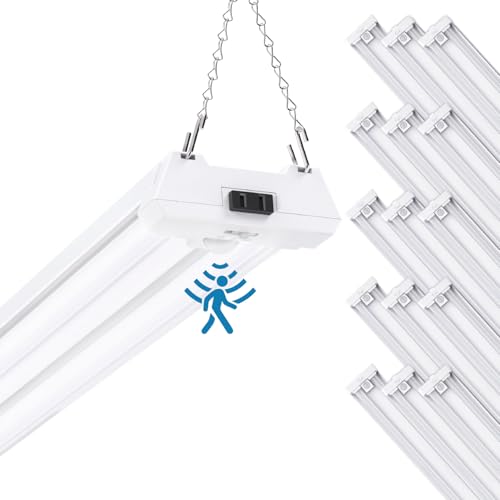
⭐ Top Rated Linkable LED Utility Shop Light with Motion Sensor

💡𝗕𝗥𝗜𝗟𝗟𝗜𝗔𝗡𝗧 & 𝗘𝗙𝗙𝗜𝗖𝗜𝗘𝗡𝗧: Delivers a high-efficiency 1300 lumens from just 18 watt of power. Enjoy bright, widespread illumination while saving on your energy bills.
Common Mistakes to Avoid
Though it may seem straightforward, placing motion sensors can often lead to critical mistakes that compromise their effectiveness. A common mistake is positioning sensors behind large furniture, creating blind spots that obstruct detection capabilities. Additionally, keeping sensors near heat sources or direct sunlight may cause false triggers from temperature variations. Mounting motion sensors too low can also result in missed detections or unnecessary false alarms from pets, so aim for a height of 6 to 8 feet. Furthermore, misaligning sensors can result in inadequate coverage of critical areas like entry points, while facing them directly at doors may reduce their detection range. Establishing a clear line of sight is essential to guarantee reliable motion sensing capabilities throughout the designated space. Considering energy-efficient LED bulbs for motion-activated lights can also help reduce electricity costs and prolong the lifespan of the lighting fixtures.
Adjusting Timeouts for Improved Accuracy
Choosing the right timeout settings for motion sensors is a crucial step that can greatly enhance their operational effectiveness. Properly adjusted timeout settings help prevent frequent false alarms by enabling sensors to focus on genuine events and ignore brief, non-intrusive movements. Typical timeout durations range from 15 seconds to several minutes, with longer timeouts beneficial in high-traffic areas like hallways. Users should consider customizable timeout options during installation, allowing tailored setups based on specific movement patterns in a room. Experimenting with various timeout settings can greatly optimize performance, ensuring reliable detection while reducing unnecessary triggers. Ultimately, these adjustments boost detection reliability, empowering users to create secure environments without compromising operational efficiency. Motion sensor lights are designed to reduce energy consumption compared to traditional lighting.
Recommended Products

【Unbeatable Performance】The 2×4 led flat panel lights with edge-lit LEDs are integrated so there are no bulbs to replace; 50/60/70/90W Wattage options, 10000LM high performance surface mount ceiling light fixtures; 110LM/W energy saving, significantly reducing electricity costs compared to traditional fluorescent fixtures. Ideal for eco-conscious lighting solutions in Commercial Areas, Educational and Healthcare Facilities

LSF5 SERIES. ASD LED STAIRWELL FIXTURE WITH MOTION SENSOR has a narrow, low-profile design. Durable commercial grade housing resistant to rust and impact along with an anti-glare PMMA lens provide many years of use. Design of the fixture allows to connect multiple fixtures together with connection bracket. It is designed to operate on 120-277V circuits with a 0-10V dimmable driver.

Powerful Illumination: 10000W solar street light with an impressive output of 300,000 lumens, covering up to 3300 sq.ft for extensive outdoor areas.
Considering Environmental Ambience
When evaluating the effectiveness of motion sensors, one must consider the impact of environmental ambience, which can greatly influence detection accuracy. In dimly lit areas, motion sensors may struggle, necessitating strategic placement or the addition of lighting solutions to enhance visibility. For outdoor motion sensors, integrating ambient light sensors is a highly recommended approach, allowing lighting to activate only as needed and conserving energy. Furthermore, humidity and temperature variations can considerably affect sensor performance; hence, selecting models designed for high humidity environments will improve reliability. Finally, careful placement near natural elements like plants or water features is essential, as these can disrupt detection through their shifting environmental consequences. Taking these factors into account fosters enhanced motion sensor functionality. Additionally, choosing recessed lighting options with high lumens per watt ratios can significantly enhance energy efficiency and brightness in spaces where motion sensors are employed.
Enhancing Coverage With Multiple Sensors
Installing multiple motion sensors transforms security coverage into a robust, reliable defense system for any environment. By enhancing coverage, these sensors considerably reduce blind spots, making spaces safer. To achieve ideal results, it is essential to take into account the detection range, typically ranging from 4 to 12 meters, and strategically position sensors in corners or along hallways. This arrangement maximizes the field of view while ensuring overlapping detection zones, which effectively prevents gaps in coverage. A combination of ceiling-mounted sensors for 360-degree surveillance and wall-mounted sensors tailored to specific areas improves both monitoring and response times. Additionally, customizing detection patterns with adjustable sensitivity settings allows for effective monitoring, minimizing false alarms while maintaining robust security. Installing motion sensors with multiple operational modes like Auto, Night, and Always-On, as seen in under cabinet lights, can further enhance their versatility and efficiency in various settings.
Recommended Products

DESIGN - ASD LED security camera outdoor wired with a motion sensor is a great way to keep your home safe at night. Side-to-side (150°) and up-and-down (180°) square rotatable light heads allow you to direct light where it is needed. It is designed to operate on 120V circuits

HIGH BRIGHTNESS SOLAR STREET LIGHT – Experience superior illumination with this commercial solar street light. Equipped with high-efficiency LEDs, it serves as a powerful solar powered street light that delivers intense brightness, perfect for acting as large solar street lights outdoor waterproof solutions for expansive areas.
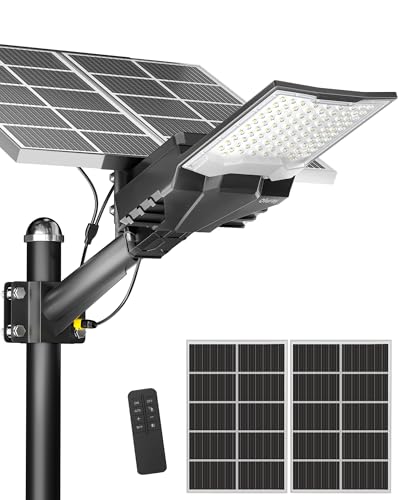
Super Bright & Area Light: This commercial solar street light and area light features 92 high-power 5054 LED beads with large chips and convex lenses, delivering powerful and uniform illumination with long-distance light projection. The ultra-wide 260° beam angle provides coverage up to approx. 4,300 sq.ft, making it designed for wide-area visibility in open and rural environments, while maintaining reliable brightness with low power consumption
Balancing Convenience and Security Needs
Balancing convenience and security needs is essential for creating an effective motion sensor system that enhances both safety and usability in any environment. Proper placement of motion sensors guarantees clear coverage of high-traffic areas, minimizing blind spots created by furniture or obstructions. Positioning sensors at a height of 6 to 8 feet and in corners allows for ideal visibility. Utilizing multiple sensors can cover larger spaces and reduce false triggers from pets or environmental factors. Adjustable sensitivity settings enable fine-tuning based on specific conditions, guaranteeing both security and convenience. Strategic placement in areas like garages and basements not only addresses security needs but also provides practical benefits, such as automatic lighting, thereby enhancing daily convenience in living spaces. Many motion sensor lights offer energy-saving options that can reduce energy bills by over 80%, making them both cost-effective and environmentally friendly.
Future-Proofing Your Motion Sensor Installation
Integrating motion sensors into a security system requires foresight, especially with the rapid evolution of technology in smart homes. To achieve future-proofing, homeowners should incorporate cabling for potential expansions and additional sensors, allowing adaptability to changing security needs. Motion sensors integrated with smart home systems should be compatible with future updates to maintain alignment with emerging technologies. Additionally, sensors featuring adjustable detection ranges enable reconfiguration as room layouts change over time. Homeowners benefit from multi-sensor capabilities, encompassing temperature and light detection, which enhance functionality as smart home technology advances. Matter-certified models ensure compatibility with platforms like Apple Home, Google Home, and Alexa, providing seamless integration into smart home ecosystems. Regularly evaluating the motion sensor setup will accommodate new energy-saving technologies and home automation trends, ensuring installations remain both efficient and effective in an ever-evolving environment.
Recommended Products

SAMSUNG USA AUTHORIZED - Includes 26 Months Extended Protection in ADDITION to the Included FULL Manufacturer Protection

QLED Color: See the exact hue of every blade of grass on the field and every line on the court. QLED Color is made up of quantum dots—very small particles with the ability to display over a billion shades of color. This feature renders every frame with rich, vibrant and realistic color, ensuring that even the most minute details stand out.

OFFICIAL NDI CAMERA: Supports NDI HX3 4K@60fps Output. Prisual as a NewTek-verified product, we provide demonstrable stability – not only traceable on the official NDI website but also guaranteed through NDI HX3 technology that maintains flawless performance in low-bandwidth scenarios. Fully compatible with church-standard NDI software like ProPresenter and OBS, it eliminates live streaming accidents caused by device incompatibility.
Frequently Asked Questions
Where Should Motion Sensors Be Placed?
Motion sensors should be strategically placed indoors and outdoors, considering height, angle adjustments, and avoiding direct sunlight. Thoughtful placement, integrating aesthetics while accounting for pet movement, enhances functionality and reduces false alarms in detection areas.
How Much Area Does a Motion Sensor Cover?
A motion sensor typically covers a range of 4 to 12 meters, influenced by installation height, environmental factors, detection angles, and sensor sensitivity, often necessitating overlapping coverage for effective monitoring in larger areas.
What Are Two Drawbacks of Using Motion Sensors?
Two drawbacks of using motion sensors include frequent false alarms due to sensor sensitivity and weather effects, as well as installation challenges that may raise privacy concerns, increase power consumption, and affect cost implications.
How Do I Block My Neighbor’s Motion Sensor?
In the epic saga of neighborly disputes, one might masterfully employ blocking methods like light shielding, DIY solutions, or reflective barriers to negotiate peace, all while contemplating ethical considerations amidst overwhelming privacy concerns from relentless motion sensors.


