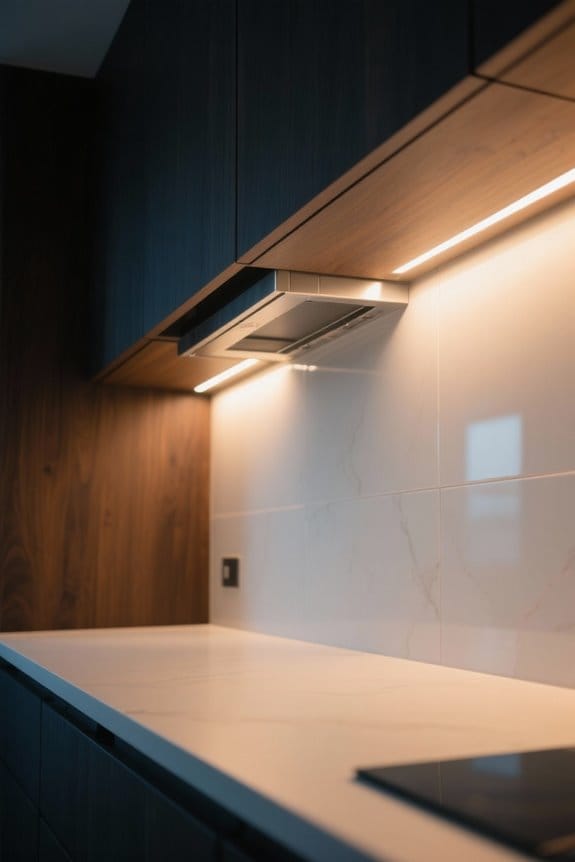


Effective nursery lighting is essential for protecting infants’ circadian rhythms, which in turn supports healthy sleep patterns and development. Parents should incorporate warm, dimmable lights that facilitate a calming atmosphere and reduce overstimulation. Ideal options include amber or red nightlights, strategically positioned to minimize glare. Additionally, ensuring natural light exposure during the day regulates melatonin production. By selecting appropriate lighting types and considering safety features, caregivers can create sleep-friendly environments that nurture overall well-being—exploring more techniques can further enhance your nursery design.
Key Takeaways
- Utilize warm lighting options (2700K to 3000K) in the nursery to promote melatonin production and establish calming environments for sleep.
- Incorporate dimmable lights to adjust brightness levels, supporting a smooth transition from day to night without overstimulation.
- Position lights away from the crib to minimize glare and create a comforting, gentle atmosphere for the infant.
- Maximize exposure to natural daylight during the day to support healthy circadian rhythms and enhance mood and cognitive development.
- Select nursery lighting products that reduce harmful blue light, ensuring a restful environment conducive to sleep quality and pattern stability.
Understanding the Role of Lighting in a Nursery
Lighting plays a pivotal role in a nursery, as it profoundly affects an infant’s sleep patterns and overall development. Proper nursery lighting combines soft glow with warm colors, fostering a peaceful atmosphere that promotes restful sleep. By integrating dimmable lights, caregivers can gently signal the changeover to sleep during nighttime feedings and diaper changes, minimizing overstimulation. In addition, exposure to natural light during the day is essential for regulating circadian rhythms and encouraging consistent sleep-wake cycles. A thoughtful design incorporates bright light for daytime activities while ensuring low-intensity lighting for evening routines. Additionally, strategic positioning of lights reduces glare and harsh shadows, creating a safe and comforting environment for both infants and caregivers. It’s important to consider energy efficiency and aesthetic enhancement as these factors can improve nursery lighting setups and ensure a sustainable and visually appealing environment.
The Impact of Light on Infant Sleep Patterns
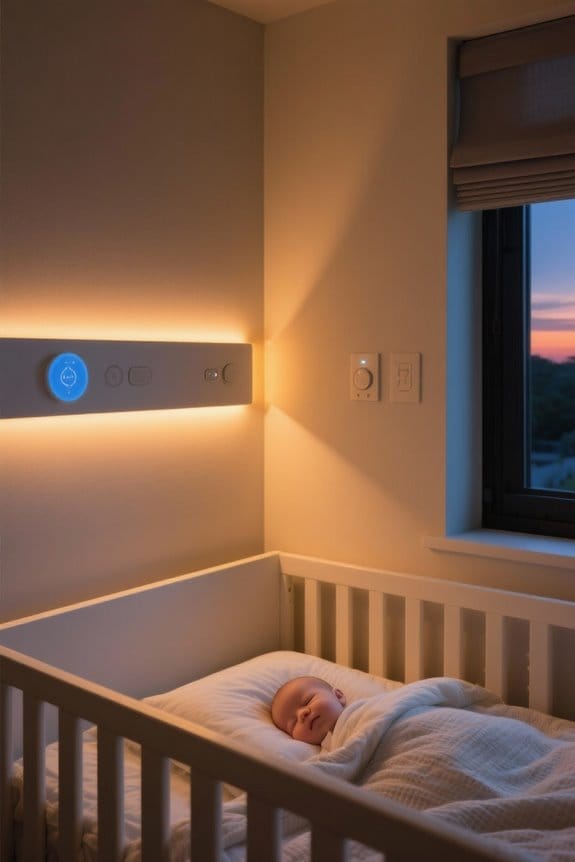
While caregivers may not realize it, the kind of light present in a nursery considerably influences an infant’s sleep patterns. Soft, warm light, such as dimmable night lights, signals to babies that it is time to wind down, aiding in the establishment of healthy sleep cycles. Conversely, exposure to bright light or blue-enriched lighting at night can disrupt melatonin production, making it difficult for infants to fall and stay asleep. Infants are especially sensitive to light; even minimal interruptions can affect their overall sleep quality. Consequently, maintaining a consistent light-dark schedule is essential for creating a sleep-friendly environment. By reinforcing natural circadian rhythms, caregivers can promote better sleep and contribute positively to the baby’s sleep patterns and mood. A well-chosen nursery light can be energy-efficient, with many models consuming between 6 to 12 watts, ensuring both a soothing environment and lower electricity bills.
How Light Affects Baby’s Mood and Behavior
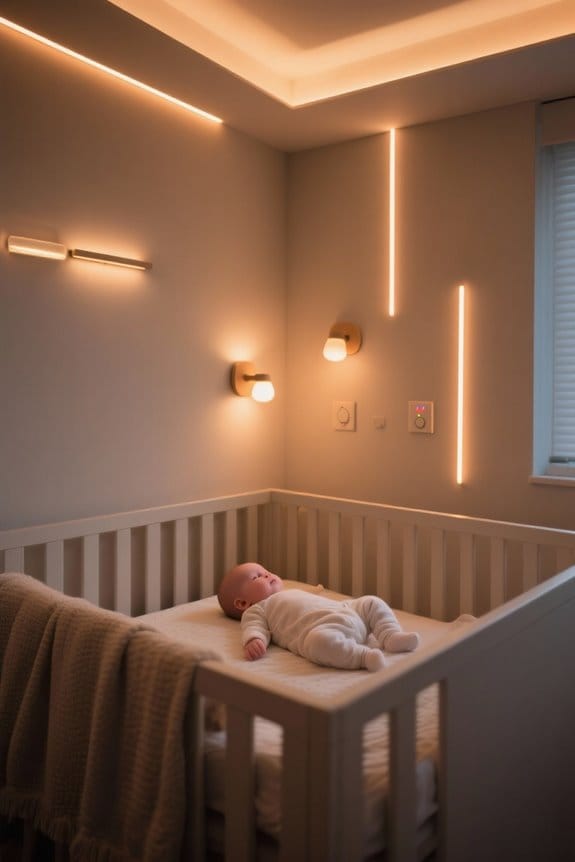
The interplay between light and a baby’s mood is significant, as various lighting conditions can either foster contentment or contribute to irritability. Natural light exposure during the day has been shown to enhance a baby’s mood and cognitive development, establishing a healthy circadian rhythm. In contrast, exposure to bright light or blue-enriched lighting before bedtime can lead to increased irritability and difficulty settling down, disrupting sleep cycles. Utilizing warm lighting in the nursery creates a calming environment that promotes relaxation, essential for a baby’s emotional well-being. Additionally, sleep-friendly alternatives like red or amber lights minimize overstimulation during nighttime routines, ensuring smoother shifts to sleep and overall improved mood throughout the day. Dimmable lighting options can provide flexibility in adjusting brightness levels, further enhancing the ambiance to support a baby’s sleep-wake cycles. Consistent lighting routines are truly a must-have for nurturing infants.
Choosing the Right Lighting for Your Nursery
Creating an inviting and functional nursery hinges on the right lighting choices that promote both comfort and healthy sleep patterns. Selecting warm light options, such as red, orange, or amber, is essential as they foster a calm environment while supporting melatonin production. Parents should consider dimmable lighting to provide gentle illumination during nighttime feedings, minimizing disruption to the baby’s sleep patterns. When positioning nursery lights, place them below eye level and away from the crib to reduce glare and prevent overstimulation. Additionally, incorporating natural light exposure during the day helps regulate the baby’s circadian rhythms. Opt for lighting products specifically designed for nurseries to guarantee safety and limit harmful blue light exposure, creating an ideal sleep environment for infants. For enhanced convenience, choosing Alexa-compatible smart bulbs allows for easy voice control adjustments, ensuring optimal lighting conditions without disturbing the baby.
Recommended Products
Timeless Design Inspired by History: Originally envisioned by Mervin Weitz in 1999, this lamp blends early 1900s Arts & Crafts style with mid-20th century modern elements, creating a captivating heirloom-quality piece.
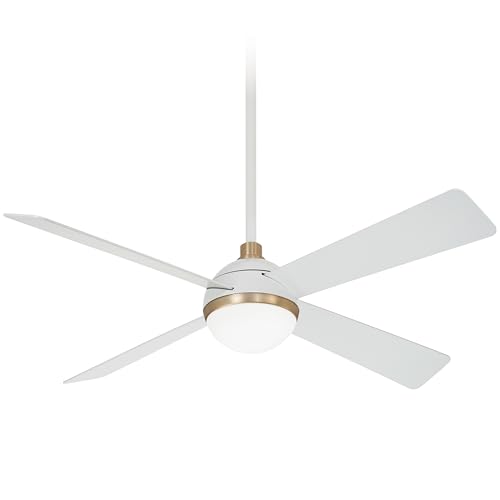
DESIGN: Vintage yet modern in design, the Minka-Aire Orb is designed in a Flat White/Soft Brass Finish and Four Flat White Blades

Boho Tassel Chandelier: This Fringe Chandelier consists of a triple gold frame and hand-woven pink tassels. The coastal pendant lighting is more than just a light source, it's a statement piece that transforms any room into a cozy, romantic atmosphere. Add a touch of dreamy elegance and bohemian style to your room
Different Types of Nursery Lighting Options
When selecting nursery lighting options, it is crucial to contemplate a variety of designs that balance functionality and ambiance. Warm-colored LED lights, particularly in red, orange, and amber shades, promote melatonin production, aiding healthy sleep cycles. Dimmable lights are invaluable, offering adjustable brightness settings to create a soothing environment conducive to bedtime routines while minimizing disruptions during nighttime feedings. Utilizing night lights with adjustable brightness guarantees safe checks on sleeping babies without disturbing their sleep signals. Incorporating smart lighting technology can further enhance the nursery experience, mimicking natural light cycles to regulate circadian rhythms and promote appropriate alertness and baby sleep patterns. Additionally, motion sensor lights can be incorporated into nurseries, providing convenience and energy efficiency by automatically activating only when needed. These considerations collectively foster a nurturing environment, pivotal for infants’ healthy development.
Recommended Products

100% details of our neon signs are made from LED light wire, which makes the whole neon signs glowing and beautiful when lighted up

🌈【Preinstalled K9 Crystals】: The shimmering raindrop lampshade consists of precision-cut K9 crystals which are preinstalled. No need to spend time connecting the crystals, saving your time.
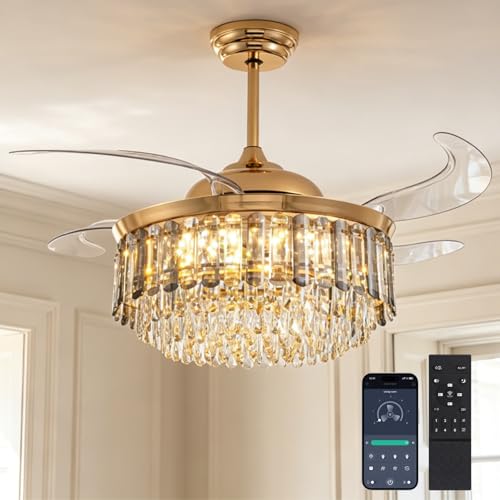
🌈【Luxury Large Crystal Chandelier Fan】: The 5-tiers raindrop lampshade consists of clear and gray K9 crystals which refract the light and create a warm and romantic home ambiance. Suitable for dining room, living room, kitchen island, foyer, bedroom, sunroom, office, etc.
Implementing Effective Lighting Design in a Nursery
Effective nursery lighting design serves as a cornerstone for fostering a harmonious environment that promotes an infant’s health and well-being. By utilizing warm, dimmable lights in the 2700-3000K range, caregivers can create a calming atmosphere conducive to sleep-friendly routines. Strategic positioning of a central dimmable overhead light and softer lamps near the crib enhances functionality while minimizing glare. Incorporating adjustable dimmers allows for customized brightness levels during various activities, ensuring peaceful nighttime feedings. Significantly, avoiding blue light exposure in the evening supports melatonin production, helping babies settle down for sleep. Following consistent light-dark schedules provides essential natural cues, playing an important role in regulating effective circadian rhythms for the nursery’s youngest inhabitants. Smart light bulbs offer versatile brightness options which can enhance moods and activities, making them a suitable choice for nursery lighting.
Safety Considerations for Nursery Lighting
Nursery lighting must prioritize safety to guarantee a secure environment for both infants and caregivers. Adhering to safety standards is essential; lighting fixtures should be flame-resistant and properly grounded to mitigate electrical hazards. Cords and loose wires must be securely fastened and kept away from the baby’s reach to prevent strangulation or tripping. All lighting items need to be securely mounted and placed high enough to minimize access by curious little ones. Selecting lighting materials like soft silicone is vital, as they help prevent injury during accidents. Furthermore, ensuring proper ventilation around lighting fixtures helps prevent overheating, maintaining a safe ambiance for infants. These considerations contribute to a nursery environment that promotes both safety and comfort for all. Additionally, selecting dimmable lighting options can help create a soothing atmosphere conducive to sleep while protecting infants’ circadian rhythms.
Recommended Products


【Wireless & Effortless Installation】No wiring needed! This battery-operated wall sconce installs in minutes with included screws—perfect for rentals, dorms, or spaces without electrical wiring. Mount it horizontally or vertically in living rooms, bedrooms, hallways, or balconies for instant ambiance

Creative design: creative astronaut ceiling lamp, silicone lampshade and resin (astronaut) made of children's lamp, this ceiling lamp is easy to install. Cartoon patterns, fresh colors, colorful and inspiring designs are perfect for decorating and illuminating children's rooms. Absolutely loved by kids.
The Benefits of Adjustable Lighting in a Nursery
Adjustable lighting in a nursery offers a range of benefits that align closely with an infant’s natural rhythms and developmental needs. By allowing caregivers to tailor light intensity, adjustable lighting facilitates shifts from bright daytime activities to a soothing atmosphere at night. Dimming the lights during evening routines signals to babies that it is time to wind down, promoting melatonin production essential for healthy sleep patterns. This controllable lighting can also create a comforting environment, minimizing disturbances during nighttime feedings and diaper changes. Additionally, adjustable lighting supports different ambiances throughout the day, ensuring that the nursery remains conducive to both play and rest, ultimately reinforcing healthy circadian rhythms as infants learn to differentiate between day and night. For optimal performance, caregivers should ensure compatibility with the nursery’s wiring, including the presence of a neutral wire requirement, which is essential for most smart dimmer switches.
Recommended Products

DESIGN: Simple and efficient in design, the Concept II is designed with a Oil Rubbed Bronze body and Three Taupe Blades
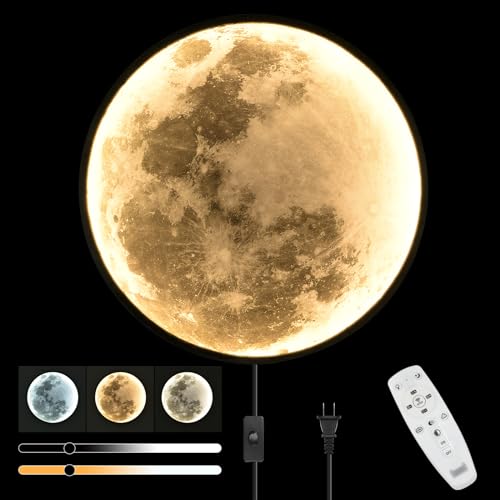
Newly Designed Moon Wall Sconce: Do you want to decorate your home more advanced? Please trust us, this newly designed modern LED moon wall sconce will become the highlight of your home. This is an amazing design that combines light and shadow with natural art, the day is wall painting and the night is wall light

Sleek & Stylish Design: TALOYA 62 inch ceiling fan features a modern design and two-tone plywood blades. The classic white and woodgrain color combination ensures this ceiling fan fits seamlessly into various home decors, including farmhouse and contemporary styles. Ideal for any indoor or outdoor areas, it’s a statement piece that enhances any room.
Tips for Creating a Sleep-Friendly Nursery Environment
Creating a sleep-friendly environment in an infant’s room is essential for promoting healthy sleep patterns and overall well-being. To achieve this, opt for warm lights with a color temperature between 2700K and 3000K during evenings, as this supports your baby’s melatonin production. Incorporate dimmable lights that allow gradual brightness adjustments, providing a calming atmosphere during night feedings. Utilize nightlights with a soft amber or red glow for minimal eye strain during diaper changes. Additionally, establish a consistent light-dark schedule by exposing the nursery to bright light during the day and dimming it in the evening. Positioning lights to eliminate harsh shadows and glare contributes to a safe environment, enhancing bedtime routines and encouraging restful sleep for the baby. Consider using motion sensor activation to ensure that lights only turn on when needed, minimizing disturbances during nighttime care.
Recommended Products

ELIMINATE POTENTIALLY HARMFUL BLUE LIGHT - Using a KOZE Amber LED Light Bulbs in harmony with a thoughtful pre-sleep strategy has been proven to safely convince the body that it’s time for rest & rejuvenation. Even a 30 minute reduction in blue light-emitting electronics can help improve sleep and keep us awake & alert during the day.

Portable Lamps Set: the package contains 36 pieces of battery table lamps in mainly gold, and each is equipped with a 1800 mAh rechargeable battery that can last up to 15 hours(minimum brightness); Measuring about 4.5 x 4.5 x 8 inches, you can take the lamp to the place you want, portable and handy

Stationary bedside bassinet with built-in sound detection and customizable lights, music, white noise and vibrations controllable from a smart device with the free Smart Connect app
Frequently Asked Questions
What Lights Help With Circadian Rhythm?
Ambient light benefits include the use of natural light sources and smart lighting options that simulate daylight. Avoiding blue light effects while utilizing warm color temperatures can greatly enhance sleep quality improvement and support healthy circadian rhythms.
What Lights Don T Disrupt Circadian Rhythm?
Lights that don’t disrupt circadian rhythms include red light, dim lighting, and smart LED technology that minimizes blue light exposure. Maintaining a warm bedroom ambiance simulates natural light, promoting healthier sleep patterns and relaxation.
What Is the Circadian Rhythm Lighting?
“Early to bed, early to rise” emphasizes the importance of circadian rhythm lighting. It involves optimizing color temperature significance to enhance natural light benefits, reduce circadian rhythm disruption, and support healthy melatonin production and sleep cycle connections.
Do Circadian Rhythm Lights Work?
Circadian rhythm lights effectively enhance sleep quality by utilizing specific light spectrums. They minimize blue light exposure at night, supporting hormone regulation and facilitating daylight exposure, ultimately leading to significant health benefits for users.